Missile Crisis Ends: Kennedy Lifts Cuba Quarantine
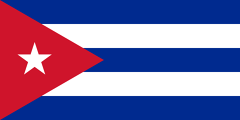
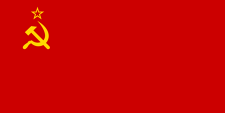
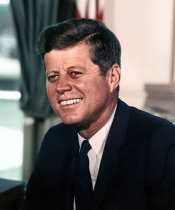
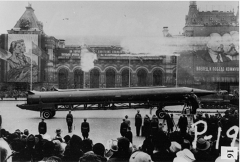
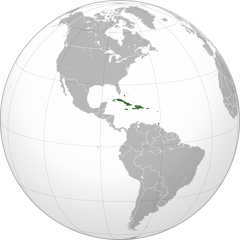
President John F. Kennedy announced the lifting of the naval quarantine around Cuba, formally ending the thirteen-day confrontation that had brought the United States and the Soviet Union closer to nuclear war than any other event in the Cold War. The crisis was over, but the world it left behind was permanently changed, haunted by the knowledge of how close two superpowers had come to destroying civilization. The crisis had begun on October 16, when U-2 reconnaissance photographs revealed Soviet medium-range ballistic missile installations under construction in Cuba, capable of striking most major American cities within minutes of launch. Kennedy rejected both a surgical air strike, which his military advisors could not guarantee would destroy all the missiles, and an invasion, which risked Soviet retaliation against Berlin. He chose instead a naval blockade, euphemistically termed a "quarantine" to avoid the legal implications of a blockade being an act of war. For thirteen days, the world waited. Soviet ships carrying additional missile components approached the quarantine line. American B-52 bombers circled with nuclear weapons aboard. Strategic Air Command went to DEFCON 2, one step below nuclear war, for the only time in history. In Cuba, Soviet forces had tactical nuclear weapons that local commanders were authorized to use against an American invasion, a fact Washington did not know. The resolution came through a combination of public diplomacy and secret channels. Khrushchev sent two letters, the first proposing withdrawal of missiles in exchange for a U.S. pledge not to invade Cuba, the second demanding removal of American Jupiter missiles from Turkey. Kennedy publicly accepted the first offer and privately agreed to the second, with the condition that the Turkey deal remain secret. Attorney General Robert Kennedy delivered this message to Soviet Ambassador Anatoly Dobrynin on the night of October 27.
November 20, 1962
64 years ago
Key Figures & Places
What Else Happened on November 20
A soldier, not a senator. Diocletian climbed from humble Dalmatian origins — possibly born a slave's son — to command Rome's entire imperial machine in 284 AD. …
The deal Emperor Suzong struck was brutal: let the Huihe soldiers loot Luoyang for three days after victory. Three days. A city of hundreds of thousands, handed…
Emperor Henry VI stormed Palermo on Christmas Day, seizing the Sicilian crown through his wife Constance's claim. The conquest united the Holy Roman Empire with…
Henry VI, Holy Roman Emperor, conquered Palermo and claimed the Kingdom of Sicily through his wife Constance, uniting it with the Holy Roman Empire. The conques…
John the Fearless, Duke of Burgundy, signed a truce with Louis of Valois, Duke of Orléans, on November 20, 1407, only to order Louis's assassination three days …
John the Fearless, Duke of Burgundy, and Louis of Valois, Duke of Orleans, agreed to a formal truce brokered by the Duke of Berry to end their escalating rivalr…
Talk to History
Have a conversation with historical figures who witnessed this era. Ask questions, explore perspectives, and bring history to life.