

Lancaster Bombers Sink Tirpitz: Germany's Last Battleship
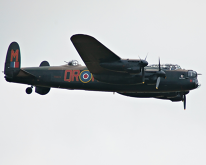
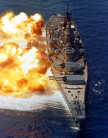
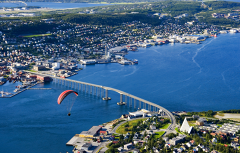
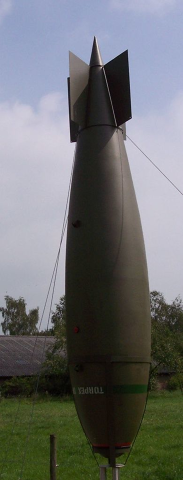
Twenty-nine Lancaster bombers of the Royal Air Force's 617 and 9 Squadrons flew through Arctic skies toward Tromso, Norway, each carrying a five-ton Tallboy earthquake bomb designed to destroy what conventional weapons could not. Their target was the Tirpitz, Nazi Germany's last operational battleship, a 42,000-ton behemoth that had spent most of the war hiding in Norwegian fjords while tying down massive Allied naval resources simply by existing. The Tirpitz was the sister ship of the Bismarck, and the Royal Navy had been obsessed with destroying her since 1942. The battleship's mere presence in Norway forced the Allies to keep capital ships in northern waters that were desperately needed elsewhere. Previous attacks had been numerous and creative. Midget submarines had damaged her in September 1943. Fleet Air Arm torpedo bombers had struck in April 1944. RAF Lancasters with Tallboy bombs had scored a hit in September 1944 that damaged her propulsion beyond repair. The Germans towed the crippled ship to shallow water near Tromso to serve as a floating coastal battery. This final raid succeeded where dozens of prior attempts had fallen short. The bombers approached from the east at 14,000 feet. German fighters that should have intercepted them failed to arrive due to a communication breakdown. The smoke screen generators that normally concealed the ship were activated too late. At least two Tallboy bombs struck the Tirpitz directly, and several near-misses buckled her hull plates. The massive ship rolled over and capsized within minutes. Of the Tirpitz's crew of approximately 1,700 men, around 1,000 were killed. Rescue teams could hear trapped sailors tapping from inside the upturned hull, and cutting teams managed to free 87 survivors through the bottom plates.
November 12, 1944
82 years ago
Key Figures & Places




What Else Happened on November 12
Tibetan forces seized the Tang Dynasty capital of Chang'an, forcing Emperor Daizong to flee the city for two weeks. This brief occupation exposed the fragility …
Thirteen-year-old Lothair III ascended to the West Frankish throne at the Abbey of Saint-Remi, securing a fragile Carolingian hold on power during a period of i…
Constantine VIII had one problem: he was dying with no male heir. His solution? Force his daughter Zoe — already in her late forties — to marry a startled noble…
Wallachian Voivode Basarab I lured the retreating Hungarian army into a mountain pass and destroyed it in a devastating ambush. The victory at Posada secured Wa…
The English Parliament granted Plymouth its official status as the first incorporated town in 1439. This legal recognition empowered local leaders to manage the…
Parliament repealed the anti-papal laws of Henry VIII, formally reconciling England with the Roman Catholic Church under Queen Mary I. This legislative reversal…
Talk to History
Have a conversation with historical figures who witnessed this era. Ask questions, explore perspectives, and bring history to life.