Benz Patents Automobile: The Age of Speed Begins
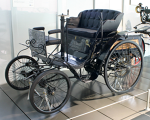
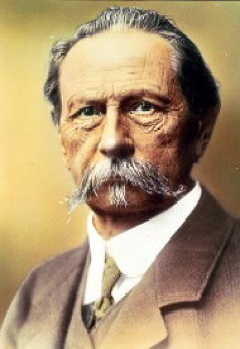
Karl Benz filed a patent for a "vehicle powered by a gas engine" on January 29, 1886, and received German patent number 37435—the document widely recognized as the birth certificate of the automobile. The three-wheeled Motorwagen, with its single-cylinder four-stroke engine producing two-thirds of a horsepower, could reach a top speed of roughly 10 miles per hour. It looked like a large tricycle with a motor bolted to the back, and almost nobody believed it would amount to anything. Benz, a mechanical engineer in Mannheim, had been working on the internal combustion engine for over a decade. Unlike Gottlieb Daimler and Wilhelm Maybach, who adapted engines to existing horse carriages, Benz designed his vehicle from the ground up as an integrated machine—engine, chassis, ignition, steering, and transmission conceived as a unified system. The engine displaced 954 cubic centimeters and ran on a petroleum-based fuel called ligroin, purchased from pharmacies. The spark ignition, differential gears, and water-cooling system were all Benz''s innovations. The public response was underwhelming. When Benz drove the Motorwagen through the streets of Mannheim, horses bolted and pedestrians stared in bewilderment. Local newspapers mocked it. Sales were nonexistent for two years. The breakthrough came in August 1888 when Benz''s wife Bertha, without her husband''s knowledge, took the improved Model III on a 65-mile journey from Mannheim to Pforzheim—the first long-distance automobile trip in history. She refueled at pharmacies, used a hatpin to clear a clogged fuel line, and a garter to insulate a wire. Her trip generated enormous publicity and proved the automobile''s practical viability. By 1899, the Benz company was the world''s largest automobile manufacturer, producing 572 vehicles that year. The patent of 1886 launched an industry that now employs over 8 million people worldwide and generates annual revenue exceeding $3 trillion. The Motorwagen itself, a fragile contraption of wood, steel, and wire, sits in the Deutsches Museum in Munich—the modest ancestor of every car on Earth.
January 29, 1886
140 years ago
Key Figures & Places

What Else Happened on January 29
The bloodiest rebellion in Chinese history ended with a son's blade. An Lushan - who'd killed hundreds of thousands and nearly toppled the Tang Dynasty - was st…
Sergius III seized the papacy by force, ousting the antipope Christopher and ordering his predecessor’s execution. This violent power grab solidified the influe…
Mu'izz al-Dawla didn't just want power—he wanted to make a statement. Blinding the sitting Caliph al-Mustakfi was a brutal medieval political ritual, rendering …
Feodor III ascended the Russian throne following the death of his father, Tsar Alexis. His brief six-year reign dismantled the archaic mestnichestvo system of a…
Napoleon Bonaparte launched a surprise night attack against Gebhard Leberecht von Blücher at Brienne-le-Château, forcing the Prussian and Russian forces to retr…
A British East India Company officer steps onto a swampy, nearly uninhabited island and sees something no one else does: a future metropolis. Raffles negotiates…
Talk to History
Have a conversation with historical figures who witnessed this era. Ask questions, explore perspectives, and bring history to life.