

O'Banion Assassinated: Chicago's Gang War Ignites
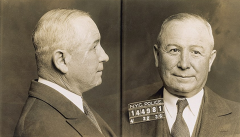
Three men walked into the Schofield flower shop on North State Street in Chicago on November 10, 1924, and Dion O'Banion, the Irish-American gangster who ran the store as a front for his bootlegging empire, extended his hand in greeting. One man grabbed O'Banion's hand and held it while the other two fired six bullets into his body. The murder ignited a gang war that consumed Chicago for the next five years and culminated in the St. Valentine's Day Massacre. O'Banion led the North Side Gang, which controlled bootlegging on Chicago's North Side during Prohibition. A former choirboy and altar server, he maintained a genuine love of flowers alongside his criminal enterprises, creating arrangements for weddings, funerals, and the social elite. His shop across from Holy Name Cathedral was both a legitimate business and the headquarters of an organization earning millions from illegal alcohol, gambling, and safecracking. The killing was ordered by Johnny Torrio, the South Side boss O'Banion had double-crossed in a deal involving the Sieben Brewery. O'Banion arranged the brewery's sale to Torrio, then tipped off police, ensuring Torrio was arrested during the transaction and faced a second Prohibition violation that meant prison time. The betrayal, combined with O'Banion's encroachments on South Side territory, convinced Torrio that coexistence was impossible. The assassins were believed to be Frankie Yale, John Scalise, and Albert Anselmi, imported gunmen from New York. O'Banion's funeral was a spectacle of gangland excess: $100,000 in flowers, 10,000 mourners, and 26 truckloads of tributes. His successor, Hymie Weiss, immediately launched retaliatory attacks on Torrio, shooting him five times and driving him into retirement. Torrio's lieutenant, Al Capone, inherited the South Side operation and escalated the violence to a level that made Chicago synonymous with organized crime for a generation.
November 10, 1924
102 years ago
Key Figures & Places

What Else Happened on November 10
Emperor Leo II died on November 10, 474, after a reign of just ten months, having likely been poisoned. His father Zeno, who had been serving as regent, assumed…
Li Bian deposed Emperor Yang Pu and seized the throne of Wu on November 10, 937, renaming himself Xu Zhigao and founding the Southern Tang dynasty. The bloodles…
Catholics besieging Catholics. Pope Innocent III had written directly, threatening to cut every soldier off from the Church — and they did it anyway. The Veneti…
A man who'd been hunted, nearly killed, and forced to hide in a jungle village now sat on the throne of what would become Southeast Asia's most powerful empire.…
Vladislaus was nineteen years old. He'd broken a peace treaty to launch this crusade, gambling everything on a decisive blow against the Ottomans near the Black…
Ninety-two people executed in three days. Christian II had promised amnesty — then broke it spectacularly, massacring Swedish nobles, clergy, and burghers acros…
Talk to History
Have a conversation with historical figures who witnessed this era. Ask questions, explore perspectives, and bring history to life.