Livingstone Found: Stanley's Famous Greeting in Ujiji
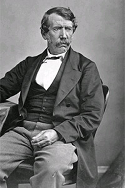
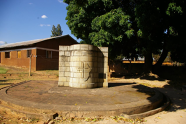
Henry Morton Stanley, a Welsh-born journalist working for the New York Herald, walked into the lakeside town of Ujiji in present-day Tanzania on November 10, 1871, and approached the only white man in the settlement with a greeting that became one of the most quoted lines in exploration history: "Dr. Livingstone, I presume?" David Livingstone, the Scottish missionary who had vanished into the African interior six years earlier, was standing before him, gaunt and ill but alive. Stanley had been dispatched by Herald publisher James Gordon Bennett Jr., who recognized that finding Livingstone would be the scoop of the decade. Livingstone had departed Zanzibar in 1866 to find the source of the Nile and had not been heard from in years. Rumors of his death circulated. Stanley assembled a caravan of roughly 200 porters and guards and spent eight months marching over 700 miles through hostile terrain, surviving malaria, tribal conflicts, and near-starvation. Livingstone refused to leave Africa. Despite severe illness, including dysentery and intestinal parasites, he was consumed by his quest to locate the Nile's source. Stanley spent four months with Livingstone, exploring the northern shore of Lake Tanganyika together and confirming that the Rusizi River flowed into rather than out of the lake, eliminating it as the Nile's source. Stanley tried repeatedly to convince Livingstone to return to civilization. Livingstone declined. Stanley departed in March 1872 carrying Livingstone's journals and letters. Livingstone continued his search and died on May 1, 1873, in present-day Zambia. His followers, Chuma and Susi, carried his embalmed body over a thousand miles to the coast for transport to England. Stanley returned to Africa and completed expeditions that traced the Congo River and mapped vast sections of the continent, work that also opened Central Africa to European colonization with consequences that echo to this day.
November 10, 1871
155 years ago
Key Figures & Places
What Else Happened on November 10
Emperor Leo II died on November 10, 474, after a reign of just ten months, having likely been poisoned. His father Zeno, who had been serving as regent, assumed…
Li Bian deposed Emperor Yang Pu and seized the throne of Wu on November 10, 937, renaming himself Xu Zhigao and founding the Southern Tang dynasty. The bloodles…
Catholics besieging Catholics. Pope Innocent III had written directly, threatening to cut every soldier off from the Church — and they did it anyway. The Veneti…
A man who'd been hunted, nearly killed, and forced to hide in a jungle village now sat on the throne of what would become Southeast Asia's most powerful empire.…
Vladislaus was nineteen years old. He'd broken a peace treaty to launch this crusade, gambling everything on a decisive blow against the Ottomans near the Black…
Ninety-two people executed in three days. Christian II had promised amnesty — then broke it spectacularly, massacring Swedish nobles, clergy, and burghers acros…
Talk to History
Have a conversation with historical figures who witnessed this era. Ask questions, explore perspectives, and bring history to life.