

Kaiser Abdicates: Germany Proclaimed a Republic
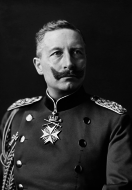
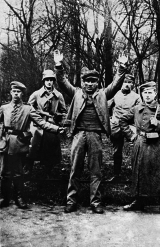
Kaiser Wilhelm II abdicated the German throne on November 9, 1918, ending the Hohenzollern dynasty's 500-year rule and four years of catastrophic war that had killed roughly two million German soldiers. Social Democrat Philipp Scheidemann proclaimed a republic from a window of the Reichstag, racing to preempt Spartacist leader Karl Liebknecht, who was preparing to declare a socialist republic from the Berlin Palace. The abdication was forced by military collapse and domestic revolution. Germany's Spring Offensive of 1918 had failed to break the Western Front, and by September, Field Marshal Hindenburg and General Ludendorff privately admitted the war was lost. Ludendorff suddenly demanded the government seek an armistice and establish parliamentary democracy, a cynical maneuver to shift blame for defeat onto civilian politicians. Revolution erupted from below. Sailors at Wilhelmshaven mutinied on October 29 rather than carry out a suicidal sortie against the British fleet. The mutiny spread to Kiel, Hamburg, Bremen, and Munich, where workers' and soldiers' councils seized government buildings. By November 9, revolution had reached Berlin. Prince Max von Baden announced the Kaiser's abdication without Wilhelm's consent, then handed power to Friedrich Ebert of the Social Democrats. Wilhelm fled to the Netherlands, where Queen Wilhelmina granted asylum. The Allies demanded extradition for war crimes but the Dutch refused. He lived in exile at Huis Doorn until his death in 1941. The republic proclaimed in his absence inherited a devastated economy, a humiliated military, and a population that had never voted for democratic government. The Weimar Republic survived just fourteen years before Hitler dismantled it, building a dictatorship on the myth that Germany had been "stabbed in the back" by the civilians who signed the armistice.
November 9, 1918
108 years ago
Key Figures & Places
Germany
Wikipedia
Kaiser
Wikipedia
Wilhelm II of Germany
Wikipedia

republic
Wikipedia
German revolution
Wikipedia

Kaiser
Wikipedia

Wilhelm II
Wikipedia

German revolution of 1918–1919
Wikipedia

Proclamation of the republic in Germany
Wikipedia

Weimar Republic
Wikipedia

World War I
Wikipedia

Prince Maximilian of Baden
Wikipedia

Abdankung Wilhelms II.
Wikipedia

German Emperor
Wikipedia

Friedrich Ebert
Wikipedia

Philipp Scheidemann
Wikipedia

Reichstag building
Wikipedia

Liga Espartaquista
Wikipedia

Karl Liebknecht
Wikipedia

Berliner Schloss
Wikipedia

República soviética
Wikipedia

Rosa Luxemburg
Wikipedia

Die Rote Fahne
Wikipedia

German Empire
Wikipedia

Germany
Wikipedia
Republic
Wikipedia
What Else Happened on November 9
The United States conducted its first nationwide test of the Emergency Alert System at 2:00 p.m. EST, sending a simultaneous alert to every TV and radio station…
A king invented a conspiracy to solve a problem he couldn't prove existed. Egica, ruling Visigothic Hispania, accused the entire Jewish population of secretly a…
Minamoto no Yoritomo's forces routed the Taira army in a night attack at the Battle of Fujigawa on November 9, 1180, though Taira commander Koremori escaped wit…
King Edward I of England forced the Treaty of Aberconwy on Welsh prince Llywelyn ap Gruffudd on November 9, 1277, stripping him of his territorial holdings outs…
Pope Martin IV excommunicated King Peter III of Aragon for seizing Sicily during the Sicilian Vespers uprising against French rule. The Pope then declared a cru…
Knights Templar officer Hugues de Pairaud confessed under torture on November 9, 1307, to charges of heresy, false idolatry, and sodomy during King Philip IV's …
Talk to History
Have a conversation with historical figures who witnessed this era. Ask questions, explore perspectives, and bring history to life.