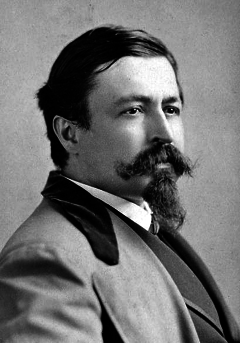
Thomas Nast Draws Elephant: Symbol of the GOP
Thomas Nast drew a panicked elephant labeled "The Republican Vote" stumbling toward a pit in the November 7, 1874, edition of Harper's Weekly, and American politics gained one of its most enduring symbols. The cartoon, titled "The Third-Term Panic," depicted various animals representing newspapers and political factions fleeing from a donkey in a lion's skin labeled "Caesarism," Nast's commentary on Democratic fears that President Grant might seek a third term. Nast was already the most influential political cartoonist in America. His drawings for Harper's Weekly had helped bring down William "Boss" Tweed and the Tammany Hall machine in New York, costing Tweed's ring an estimated $200 million in stolen funds. Tweed reportedly said, "I don't care what they print about me. Most of my constituents can't read. But they can sure see them damn pictures." Nast had also popularized the donkey as a Democratic symbol, first using it in 1870. The elephant cartoon responded to a specific political crisis. Democrats appeared poised to win the House for the first time since before the Civil War, driven by disgust with Grant administration scandals. The New York Herald had warned that Grant harbored dictatorial ambitions, a charge Nast depicted as a donkey dressed in lion's clothing frightening the Republican elephant and other political animals into a stampede. Republicans did lose the House in 1874, ending their post-Civil War dominance. Nast continued using the elephant in subsequent cartoons, and other illustrators adopted it. Within a decade, the elephant was inseparable from Republican identity. Nast's broader legacy extends beyond party symbols: he created the modern image of Santa Claus, influenced Uncle Sam's design, and demonstrated that editorial cartoons could function as genuine political weapons.
November 7, 1874
152 years ago
Key Figures & Places
What Else Happened on November 7
The charge sounds almost absurdly mundane — a grain fleet, sitting idle. But that's what brought Athanasius of Alexandria down. Emperor Constantine didn't exile…
The Sixth Ecumenical Council convened in Constantinople under Emperor Constantine IV to resolve the Monothelite controversy over whether Christ had one will or …
Charles the Simple of West Francia and Henry the Fowler of East Francia signed the Treaty of Bonn on November 7, 921, formally recognizing the Rhine as the bord…
Fifty thousand Ming soldiers. Ambushed. Gone — in a single night near the marshes of Tốt Động. Lê Lợi's rebels had spent years bleeding in the mountains of Lam …
A 280-pound rock fell from a clear sky and buried itself six feet into a wheat field. A young boy watched it hit. Villagers rushed out, chipped off pieces as so…
Christopher Columbus returned to Spain from his fourth and final voyage, broken in health and stripped of most of his titles. He had discovered Central American…
Talk to History
Have a conversation with historical figures who witnessed this era. Ask questions, explore perspectives, and bring history to life.