

Lord Dunmore's Proclamation: First Mass Emancipation of Slaves in America
He wasn't an abolitionist. John Murray, Lord Dunmore, didn't care about freedom — he needed soldiers. Desperate after fleeing his own governor's mansion, he promised liberty to any enslaved person who could reach British lines and fight. Hundreds ran. Some estimates say 800 men joined his Ethiopian Regiment within weeks. But the offer only applied to rebels' slaves, not loyalists'. And when the British lost? Most were abandoned, sold, or dead from smallpox. The first mass emancipation in North American history was a military recruitment ad.
November 7, 1775
251 years ago
Key Figures & Places
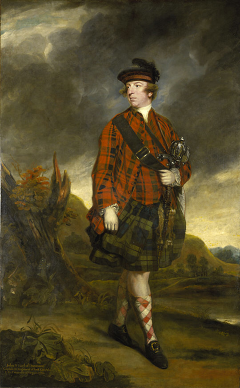
John Murray, 4th Earl of Dunmore
Wikipedia
Royal Governor of Virginia
Wikipedia
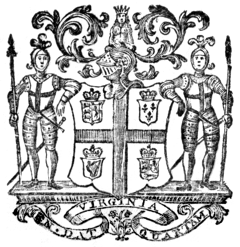
Colony of Virginia
Wikipedia
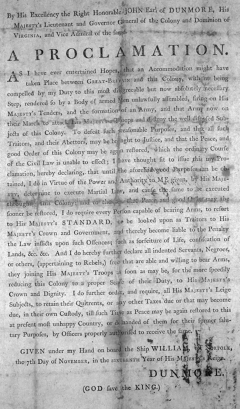
Lord Dunmore's Offer of Emancipation
Wikipedia

John Murray, 4th Earl of Dunmore
Wikipedia
List of colonial governors of Virginia
Wikipedia

Colony of Virginia
Wikipedia

Dunmore's Proclamation
Wikipedia
What Else Happened on November 7
The charge sounds almost absurdly mundane — a grain fleet, sitting idle. But that's what brought Athanasius of Alexandria down. Emperor Constantine didn't exile…
The Sixth Ecumenical Council convened in Constantinople under Emperor Constantine IV to resolve the Monothelite controversy over whether Christ had one will or …
Charles the Simple and Henry the Fowler signed a peace treaty along the Rhine, formally recognizing their shared border in 921 AD. This pact ended decades of Fr…
Fifty thousand Ming soldiers. Ambushed. Gone — in a single night near the marshes of Tốt Động. Lê Lợi's rebels had spent years bleeding in the mountains of Lam …
Mehr als 24 Jahre nach ihrer Verbrennung wird in der Kathedrale Notre-Dame de Paris der Prozess gegen Jeanne d’Arc neu aufgerollt.
Der in Ungarn eingedrungene, aber mit seinem Heer unterlegene römisch-deutsche König Maximilian I. schließt den Frieden von Pressburg. Der Habsburger erkennt di…
Talk to History
Have a conversation with historical figures who witnessed this era. Ask questions, explore perspectives, and bring history to life.