

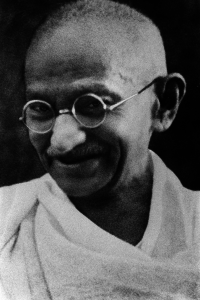
Gandhi Arrested Leading Indian Miners' March in South Africa
Mohandas Gandhi leads a march of Indian miners in South Africa and faces immediate arrest for his defiance. This confrontation forces the colonial government to confront the brutality of its racial laws, galvanizing the global Indian independence movement and establishing Gandhi's strategy of nonviolent resistance as a potent political force.
November 6, 1913
113 years ago
Key Figures & Places


What Else Happened on November 6
Constantius II handed power to a man he genuinely expected to fail. Julian was a bookish scholar, barely tested, given Gaul almost as a placeholder — someone co…
A powerful earthquake destroyed large sections of the Walls of Constantinople, toppling 57 towers and leaving the city exposed. The Byzantine government mobiliz…
Emperor Otto I convened the Synod of Rome at St. Peter's Basilica to depose Pope John XII, citing the pontiff's armed rebellion against imperial authority. This…
Der Verkauf von Lehen wird im Heiligen Römischen Reich durch Kaiser Lothar III. verboten.
King Henry III seals the Charter of the Forest at St Paul's Cathedral, restoring free men's access to royal lands that William the Conqueror and his heirs had r…
Pfalzgraf Ruprecht I. schlägt mit seinem Reichsheer die rheinischen Städte des Schwäbischen Städtebundes bei Worms.
Talk to History
Have a conversation with historical figures who witnessed this era. Ask questions, explore perspectives, and bring history to life.