Panama Breaks Free: Canal Construction Starts
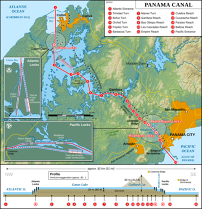
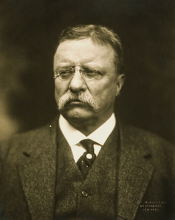
Panama declared independence from Colombia on November 3, 1903, in a revolution that lasted roughly a day and cost almost no bloodshed, largely because the United States Navy made certain Colombia could not respond. The USS Nashville sat in the harbor at Colon, blocking Colombian troops from reaching Panama City, while American railroad officials refused to provide trains that would have transported reinforcements across the isthmus. The revolution was orchestrated less by Panamanian patriots than by a French engineer with a financial stake in the outcome. Philippe-Jean Bunau-Varilla had been involved in Ferdinand de Lesseps' failed French canal effort in the 1880s and held shares in the bankrupt Compagnie Nouvelle du Canal de Panama. A canal built by the Americans through Panama would make those shares valuable; a canal through Nicaragua, the competing route favored by many in Congress, would make them worthless. President Theodore Roosevelt wanted a canal badly and had grown impatient with Colombian demands for better terms. When Colombia's senate rejected the Hay-Herran Treaty, which offered $10 million plus annual payments for canal rights, Roosevelt privately expressed fury. Bunau-Varilla, sensing opportunity, coordinated with a small group of Panamanian separatists and assured them of American support. The new Panamanian government, barely hours old, appointed Bunau-Varilla as its ambassador to Washington. He negotiated the Hay-Bunau-Varilla Treaty in less than two weeks, granting the United States control of a ten-mile-wide Canal Zone "in perpetuity" in exchange for $10 million and annual rent of $250,000. No Panamanian was present for the signing. The terms were so favorable to Washington that they generated resentment lasting generations, culminating in the 1977 Torrijos-Carter Treaties that returned the Canal Zone to Panamanian sovereignty in 1999.
November 3, 1903
123 years ago
Key Figures & Places

What Else Happened on November 3
Constantius II spent years hunting Julian — exiling family members, executing rivals, building an empire where only he could rule. Then a fever won. Dying at Mo…
A Persian captive named Piruz Nahavandi assassinated the second caliph, Umar ibn al-Khattab, while he led morning prayers in Medina. This sudden death triggered…
English King William Rufus attempted to seize Rouen from his brother Robert, Duke of Normandy, on November 3, 1090, but the assault devolved into a riot that th…
Giovanni Villani watched his city drown. The Arno surged so violently in 1333 that Florence lost bridges, buildings, and hundreds of lives in a single catastrop…
Charles the Bold’s Burgundian forces razed Liège to the ground, systematically dismantling the city’s fortifications and burning its architectural treasures. Th…
Henry VII and Charles VIII signed the Peace of Etaples, ending English military intervention in Brittany. By securing a substantial annual pension from the Fren…
Talk to History
Have a conversation with historical figures who witnessed this era. Ask questions, explore perspectives, and bring history to life.