

Balfour Declaration: Britain Backs Jewish Homeland
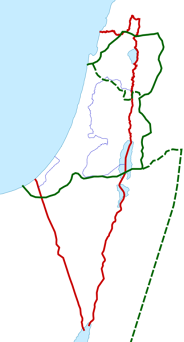
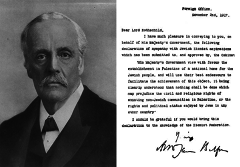
British Foreign Secretary Arthur Balfour signed a 67-word letter on November 2, 1917, that would shape Middle Eastern geopolitics for the next century. Addressed to Lord Walter Rothschild, a leader of the British Jewish community, the declaration stated that His Majesty's Government viewed "with favour the establishment in Palestine of a national home for the Jewish people" while stipulating that "nothing shall be done which may prejudice the civil and religious rights of existing non-Jewish communities." The declaration emerged from a convergence of wartime strategy, imperial ambition, and genuine sympathy. Britain hoped to win Jewish support for the Allied cause at a critical moment in World War I, particularly among influential communities in the United States and Russia. Chaim Weizmann, a chemist who had contributed to the war effort and was a persuasive Zionist advocate, had cultivated relationships with senior British officials for years. The strategic value of a friendly population near the Suez Canal also factored into British calculations. The internal contradiction was apparent from the start. Palestine's population in 1917 was roughly 90 percent Arab. Promising a national home for one people in a territory overwhelmingly inhabited by another created a tension that no diplomatic language could resolve. The phrase "national home" was deliberately vague, avoiding the word "state" to placate both Arab allies and cautious cabinet members. The declaration was incorporated into the League of Nations mandate for Palestine in 1922, giving it international legal force. Jewish immigration increased steadily through the 1920s and 1930s, generating growing Arab resistance. The competing promises Britain had made to Arab leaders during the war created a legacy of mistrust that fueled decades of conflict. Every subsequent attempt to resolve the Israeli-Palestinian dispute has grappled with the contradiction Balfour embedded in those 67 words.
November 2, 1917
109 years ago
Key Figures & Places


What Else Happened on November 2
A foreign ruler was murdered inside a Chinese imperial palace — and the emperor signed off on it. Tong Yabghu Qaghan, powerful leader of the Western Turkic Khag…
The Armagnac and Burgundian factions signed the Peace of Bicetre, temporarily halting the civil war that had consumed France while England circled. The truce ba…
The water didn't recede. It swallowed entire villages whole. The All Saints' Flood of 1570 — named for the feast day it struck — sent walls of North Sea water c…
Hundreds of Narragansett people, mostly women, children, and elderly, were sheltering inside the Great Swamp Fort when colonial forces arrived on December 19, 1…
Four British warships shattered against the rocks of the Isles of Scilly after navigators miscalculated their position by miles. This disaster forced Parliament…
Two men in a Boston tavern essentially invented American political infrastructure. Samuel Adams pushed hard for it — not a battle plan, not a declaration, just …
Talk to History
Have a conversation with historical figures who witnessed this era. Ask questions, explore perspectives, and bring history to life.