Seabiscuit Defeats War Admiral: Hope Wins the Century's Race
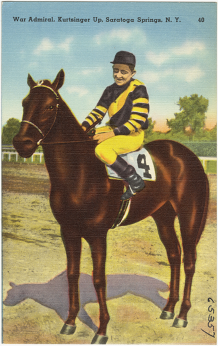
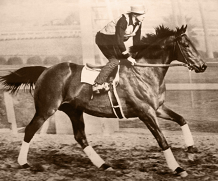
Forty million Americans pressed their ears against radio sets on November 1, 1938, to hear the call of a race between two horses that had become proxies for a national argument about breeding, class, and the meaning of greatness. War Admiral, the Triple Crown winner and son of the legendary Man o' War, represented pedigree and establishment power. Seabiscuit, a knobby-kneed former claimer who had spent his early career losing to inferior competition, represented every underdog in a Depression-ravaged country. The match race at Pimlico Race Course in Baltimore was the culmination of months of public demand. War Admiral's owner, Samuel Riddle, had repeatedly ducked the challenge, insisting on conditions favorable to his colt. Seabiscuit's owner, Charles Howard, a San Francisco automobile magnate, finally agreed to Riddle's terms: Pimlico's shorter track, a walk-up start instead of starting gates, and a distance of one and three-sixteenths miles. What happened stunned the racing establishment. Jockey George Woolf, riding Seabiscuit, broke fast and took the early lead, a deliberate tactical reversal of Seabiscuit's usual come-from-behind style. War Admiral pulled alongside in the backstretch, and the two horses ran head-to-head through the far turn. Then Woolf asked Seabiscuit for more. The undersized bay pulled away steadily through the stretch, winning by four lengths in track-record time of 1:56.6. The victory transcended horse racing. Seabiscuit received more newspaper column inches in 1938 than Franklin Roosevelt, Hitler, or Mussolini. For a country mired in economic hardship, the scrappy horse who beat the aristocratic champion became the most potent sports metaphor of the era. Seven decades later, Laura Hillenbrand's bestselling biography and its film adaptation proved the story had lost none of its emotional power.
November 1, 1938
88 years ago
Key Figures & Places
What Else Happened on November 1
Roman Emperor Valentinian I received word that the Alemanni had breached the Rhine frontier, launching a massive raid into Gaul. This breach forced the emperor …
The emperor packed up and personally moved to Paris. Not a general, not a deputy — Valentinian I himself relocated his command to a city most Romans still consi…
A single land deed buried in bureaucratic paperwork accidentally named a nation. Emperor Otto III, just sixteen years old, signed a document granting land right…
Empress Matilda surrendered her claim to the English throne after months of political deadlock, allowing Stephen of Blois to reclaim his title as King. This col…
Fifteen-year-old Philip II ascended the French throne, inheriting a kingdom largely confined to the royal domain around Paris. By centralizing administrative po…
The Seljuq Turks seized the strategic port of Sinope, securing their first direct access to the Black Sea. This conquest transformed the Sultanate of Rum into a…
Talk to History
Have a conversation with historical figures who witnessed this era. Ask questions, explore perspectives, and bring history to life.