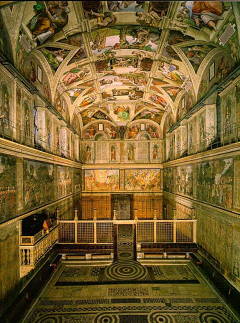
Michelangelo Finishes Sistine Chapel: Renaissance Art Reaches its Peak
Four years of grueling labor ended with a single gesture: the removal of scaffolding that had concealed the most ambitious painting project in Western history. Pope Julius II, the warrior-pope whose iron will had commissioned the work, gazed upward at 343 figures sprawling across 5,800 square feet of vaulted ceiling. Michelangelo Buonarroti, a sculptor who had protested he was no painter, had created something that redefined the possibilities of visual art. The commission began in 1508 as a relatively modest assignment. Julius II initially wanted Michelangelo to paint the twelve apostles against a starry background. The artist, dissatisfied with such a conventional scheme, convinced the pope to let him pursue a far more complex program depicting the Genesis narrative, from the Creation to the story of Noah. Working largely alone on a specially designed scaffold 60 feet above the chapel floor, Michelangelo painted in fresco, applying pigment to wet plaster in sessions that left him with permanent neck and eye damage. The technical achievement was staggering. Michelangelo developed his compositions directly on the ceiling without detailed preparatory cartoons for every section. His figures grew bolder and larger as he worked from the entrance wall toward the altar, gaining confidence in the medium. The iconic image of God reaching toward Adam became the visual shorthand for divine creation itself, reproduced billions of times in the five centuries since. When the ceiling was unveiled on November 1, 1512, it immediately transformed expectations of what painting could accomplish. Artists traveled from across Europe to study its anatomical precision and emotional intensity. Raphael, working just rooms away on the Vatican Stanze, reportedly altered his own style after glimpsing the work in progress. The Sistine ceiling did not merely decorate a chapel. It announced that a single human imagination could contain the entire drama of existence.
November 1, 1512
514 years ago
Key Figures & Places
What Else Happened on November 1
Roman Emperor Valentinian I received word that the Alemanni had breached the Rhine frontier, launching a massive raid into Gaul. This breach forced the emperor …
The emperor packed up and personally moved to Paris. Not a general, not a deputy — Valentinian I himself relocated his command to a city most Romans still consi…
A single land deed buried in bureaucratic paperwork accidentally named a nation. Emperor Otto III, just sixteen years old, signed a document granting land right…
Empress Matilda surrendered her claim to the English throne after months of political deadlock, allowing Stephen of Blois to reclaim his title as King. This col…
Fifteen-year-old Philip II ascended the French throne, inheriting a kingdom largely confined to the royal domain around Paris. By centralizing administrative po…
The Seljuq Turks seized the strategic port of Sinope, securing their first direct access to the Black Sea. This conquest transformed the Sultanate of Rum into a…
Talk to History
Have a conversation with historical figures who witnessed this era. Ask questions, explore perspectives, and bring history to life.