Roosevelt Approves $1 Billion Lend-Lease to Allies
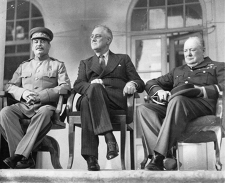
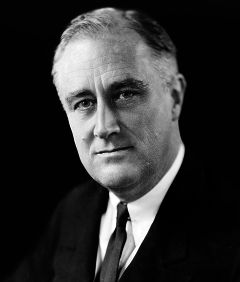
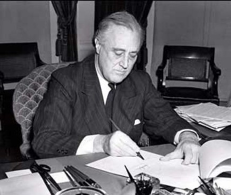
President Franklin Roosevelt approved $1 billion in Lend-Lease military aid to the Allied nations on October 30, 1941, accelerating the flow of American weapons, food, and industrial materials to Britain and the Soviet Union five weeks before the Japanese attack on Pearl Harbor would bring the United States officially into World War II. The decision was a practical acknowledgment that America was already a belligerent in everything but name. The Lend-Lease Act, signed into law on March 11, 1941, had given Roosevelt broad authority to transfer military equipment to any nation whose defense he deemed vital to American security. The legislation circumvented the cash-and-carry provisions of the Neutrality Acts, which had required Britain and France to pay upfront for American arms. By late 1940, Britain was running out of money. Winston Churchill wrote to Roosevelt in December 1940 warning that "the moment approaches when we shall no longer be able to pay cash for shipping and other supplies." Roosevelt's response was characteristically creative. At a press conference, he compared Lend-Lease to lending a garden hose to a neighbor whose house was on fire: "I don't want $15 for the hose; I want my garden hose back after the fire is over." The analogy was disingenuous in the extreme since tanks and ammunition cannot be returned after use, but it gave Congress and the public a framework that avoided the politically toxic word "loan." The October authorization represented a massive escalation. American factories were already retooling for war production, shipping Sherman tanks, P-40 fighters, ammunition, canned food, and raw materials across the Atlantic in convoys that German U-boats attacked relentlessly. The Battle of the Atlantic was effectively an undeclared naval war between the United States and Germany throughout 1941. American destroyers escorted convoys, shared intelligence with the Royal Navy, and had already exchanged fire with German submarines. By war's end, the United States would provide roughly $50 billion in Lend-Lease aid (over $700 billion in today's dollars) to more than 30 countries. Britain received the largest share, followed by the Soviet Union, China, and France. The program sustained Britain's war effort during its most desperate period and helped equip the Soviet armies that broke the German invasion. Lend-Lease was the arsenal of democracy in literal form, transforming America's industrial capacity into the decisive material advantage that won the war.
October 30, 1941
85 years ago
Key Figures & Places
What Else Happened on October 30
Emperor Hadrian founded the city of Antinoöpolis along the Nile in 130 AD to honor his companion Antinous, who had drowned in the river under mysterious circums…
Antioch had been one of Christianity's most important cities, home to some of the faith's earliest communities. The Muslim siege lasted months. The city surrend…
Arab and Persian pirates stormed Guangzhou, looting the city’s warehouses and burning its foreign trading fleet. This violent raid forced the Tang Dynasty to sh…
Ranulf of Apulia crushed the forces of Roger II of Sicily at the Battle of Rignano, securing a decisive victory for the rebellious Norman barons. This defeat fo…
Ranulf of Apulia routed King Roger II of Sicily's forces at the Battle of Rignano on October 30, 1137, inflicting a rare military defeat on the powerful Norman …
King Louis IX of France had died of dysentery during the siege of Tunis, leaving his brother Charles I of Sicily to negotiate the terms of the Eighth Crusade's …
Talk to History
Have a conversation with historical figures who witnessed this era. Ask questions, explore perspectives, and bring history to life.