War of the Worlds Broadcast: Orson Welles Panics U.S.
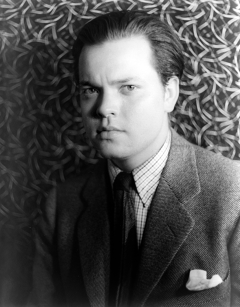
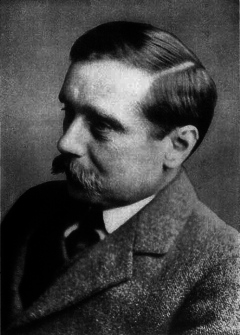
Orson Welles, a 23-year-old theater director with a gift for provocation, sat before a CBS microphone on the evening of October 30, 1938, and opened his Mercury Theatre on the Air broadcast with a calm reading of the weather forecast. Within an hour, telephone switchboards across the northeastern United States were overwhelmed with calls from listeners who believed that Martians had landed in New Jersey and were incinerating the American countryside with heat rays. The broadcast was an adaptation of H.G. Wells's 1898 novel The War of the Worlds, reimagined by Welles and writer Howard Koch as a series of fake news bulletins interrupting what appeared to be a normal evening of dance music programming. The format was devastatingly effective. Listeners who tuned in after the opening credits heard what sounded like genuine emergency reports: a "professor" at Princeton Observatory describing explosions on Mars, a "reporter" at Grover's Mill, New Jersey, describing a metallic cylinder emerging from a crater, then screaming as Martian war machines rose from the ground and began destroying everything in their path. The broadcast contained multiple disclaimers identifying it as fiction, but millions of listeners had been tuned to NBC's more popular Chase and Sanborn Hour and switched to CBS during a musical interlude, missing the introduction entirely. The Mercury Theatre ran without commercial interruptions, which eliminated the natural breaks that would have reminded listeners they were hearing a drama. Compounding the effect, the year 1938 had conditioned Americans to expect terrifying news bulletins: Hitler had annexed Austria in March, the Munich Crisis had dominated the airwaves in September, and war in Europe seemed imminent. The scale of the resulting panic has been debated by historians and media scholars for decades. Contemporary newspaper accounts described mass hysteria, traffic jams from fleeing residents, and people wrapping their faces in wet towels to protect against "Martian gas." Later research suggested the panic was far less widespread than reported, and that newspapers, losing advertising revenue to radio, had strong incentive to exaggerate the incident and call for broadcast regulation. Welles, who claimed to be shocked by the reaction, became an overnight celebrity. CBS and the FCC investigated but took no punitive action. Within two years, Welles had leveraged his notoriety into a Hollywood contract and produced Citizen Kane. The War of the Worlds broadcast remains the most famous single episode in American radio history, a cautionary tale about the power of media to blur the line between fiction and reality.
October 30, 1938
88 years ago
Key Figures & Places

What Else Happened on October 30
Emperor Hadrian founded the city of Antinoöpolis along the Nile in 130 AD to honor his companion Antinous, who had drowned in the river under mysterious circums…
Antioch had been one of Christianity's most important cities, home to some of the faith's earliest communities. The Muslim siege lasted months. The city surrend…
Arab and Persian pirates stormed Guangzhou, looting the city’s warehouses and burning its foreign trading fleet. This violent raid forced the Tang Dynasty to sh…
Ranulf of Apulia crushed the forces of Roger II of Sicily at the Battle of Rignano, securing a decisive victory for the rebellious Norman barons. This defeat fo…
Ranulf of Apulia routed King Roger II of Sicily's forces at the Battle of Rignano on October 30, 1137, inflicting a rare military defeat on the powerful Norman …
King Louis IX of France had died of dysentery during the siege of Tunis, leaving his brother Charles I of Sicily to negotiate the terms of the Eighth Crusade's …
Talk to History
Have a conversation with historical figures who witnessed this era. Ask questions, explore perspectives, and bring history to life.