Black Tuesday: Stock Crash Triggers Great Depression
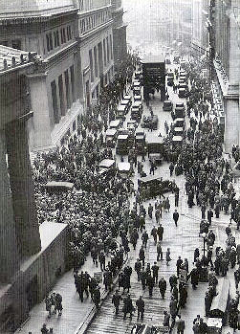
Sixteen million shares changed hands on the New York Stock Exchange on October 29, 1929, a volume record that would not be surpassed for nearly forty years. The ticker tape ran four hours behind actual trades. Prices fell so fast that many investors had no idea they had been wiped out until they read the evening papers. Black Tuesday was the day the Roaring Twenties died, and the Great Depression was born. The crash had been building for weeks. September's record highs gave way to increasingly volatile trading in early October. Black Thursday on the 24th saw the first wave of panic selling, briefly halted by a bankers' consortium that bought blue-chip stocks to stabilize prices. Black Monday on the 28th destroyed the illusion of stability when the Dow fell nearly 13 percent with no intervention. By Tuesday morning, the panic was total. Sell orders flooded in from across the country before the opening bell. Margin calls, demands that investors put up more cash to cover their leveraged positions, forced millions of shares onto the market simultaneously. There were virtually no buyers. Stocks that had been worth fortunes a month earlier sold for pennies. The Dow Jones Industrial Average fell another 12 percent, bringing the two-day loss to roughly 25 percent. Outside the Exchange, crowds gathered on Wall Street. Police Commissioner Grover Whalen stationed extra officers around the financial district. The rumors of mass suicides were largely exaggerated, but the despair was real. The human cost multiplied over the following years. Banks that had lent heavily to stock speculators began failing. Credit dried up. Businesses closed. Unemployment rose from 3 percent in 1929 to 25 percent by 1933. Industrial production fell by nearly half. Farm prices collapsed, and foreclosures swept across rural America. The global economy followed the United States down as international trade contracted and European banks, heavily exposed to American loans, failed in cascading waves. Black Tuesday did not cause the Great Depression by itself. Structural weaknesses in the banking system, agricultural overproduction, income inequality, and the Federal Reserve's tight monetary policy all contributed. But October 29 was the moment the illusion of permanent prosperity shattered. The crash destroyed public faith in financial markets and led directly to the creation of the Securities and Exchange Commission, the Federal Deposit Insurance Corporation, and the regulatory framework that governed American finance for the rest of the century.
October 29, 1929
97 years ago
Key Figures & Places

What Else Happened on October 29
Cyrus the Great walked into Babylon in 539 BCE without a battle. The priests had opened the gates for him — they hated their own king. He immediately issued a d…
Constantine entered Rome in 312 after defeating Maxentius at the Milvian Bridge, where his rival drowned in the Tiber wearing full armor. Soldiers fished out th…
The marriage of the child emperor Valentinian III to Licinia Eudoxia united the eastern and western branches of the House of Theodosius, creating a dynastic bon…
Byzantine forces reclaimed Antioch from the Hamdanid dynasty, ending over three centuries of Arab control. This victory restored the city as a critical eastern …
Conradin, the last legitimate male heir of the Hohenstaufen dynasty, was sixteen years old when he marched to Italy to reclaim his grandfather's throne from Cha…
Paris held its first witchcraft trial. A woman named Jehenne de Brigue stood accused of causing impotence through sorcery, killing livestock with curses, meetin…
Talk to History
Have a conversation with historical figures who witnessed this era. Ask questions, explore perspectives, and bring history to life.