Khrushchev Retreats: Soviet Missiles Leave Cuba
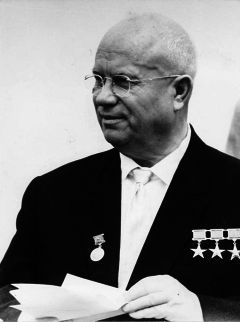
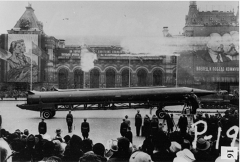
Radio Moscow broadcast a message from Soviet Premier Nikita Khrushchev at 9:00 a.m. Washington time on October 28, 1962, announcing that he had ordered the dismantling and removal of all Soviet missiles from Cuba. The announcement ended thirteen days of nuclear brinkmanship that had brought the United States and Soviet Union to the brink of war and left the rest of the world holding its breath. The resolution came through a deal negotiated partly through official channels and partly through a back-channel exchange between Attorney General Robert Kennedy and Soviet Ambassador Anatoly Dobrynin. The terms were straightforward: the Soviet Union would withdraw its nuclear missiles from Cuba under United Nations inspection, and the United States would publicly pledge not to invade Cuba. In a secret addendum that would not become public for decades, Washington also agreed to remove its own Jupiter intermediate-range ballistic missiles from Turkey within six months. Khrushchev chose to broadcast his acceptance over public radio rather than through diplomatic cables because speed was essential. Black Saturday, the previous day, had nearly spiraled out of control. A U-2 reconnaissance plane had been shot down over Cuba by a Soviet anti-aircraft missile fired without authorization from Moscow. American military leaders were pressing hard for an immediate retaliatory strike. Kennedy had resisted but could not hold the line indefinitely. The aftermath reshaped the Cold War's architecture. Both sides, sobered by how close they had come to catastrophe through miscommunication and unauthorized military action, established a direct communications link between Washington and Moscow, the so-called "hot line," in June 1963. The crisis also accelerated negotiations on the Partial Nuclear Test Ban Treaty, signed in August 1963, the first arms control agreement of the nuclear age. Khrushchev's retreat cost him politically at home. Hardliners within the Soviet leadership viewed the withdrawal as a humiliation, and it contributed to his removal from power in October 1964. Kennedy emerged with enhanced prestige, though historians later revealed that the crisis was resolved through mutual concession rather than American toughness alone. Cuba remained a Soviet ally, heavily armed with conventional weapons, for the next three decades. Fidel Castro, who had urged Khrushchev to launch a nuclear first strike rather than back down, was furious at being excluded from the negotiations and never fully forgave Moscow.
October 28, 1962
64 years ago
Key Figures & Places
What Else Happened on October 28
The Praetorian Guard forced Emperor Nerva to adopt Trajan as his heir. Nerva was 66 and childless. The Guard had murdered his predecessor. They wanted a militar…
Maxentius declared himself Roman Emperor after his father's failed comeback attempt. The Praetorian Guard backed him. Rome's citizens backed him. The actual emp…
Constantine marched his outnumbered army across the Milvian Bridge over the Tiber River on October 28, 312 AD, and routed the forces of his rival Maxentius in a…
Visigothic forces sacked Braga, capital of the Suevi kingdom in northwest Iberia. They burned the city's churches to the ground. The Suevi had converted to Cath…
Byzantine general Michael Bourtzes scaled Antioch's walls at night with a small force and seized two towers. The city had been in Arab hands for 340 years. Bour…
Byzantine forces recaptured Antioch in 969 after 333 years of Arab rule. Emperor Nikephoros II Phokas sent his best general, Michael Bourtzes, who climbed the w…
Talk to History
Have a conversation with historical figures who witnessed this era. Ask questions, explore perspectives, and bring history to life.