Volstead Act Passed: Prohibition Becomes Law
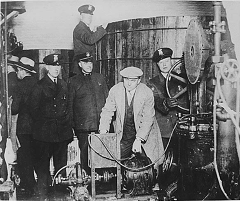
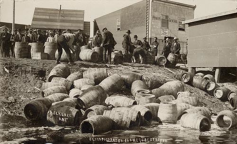
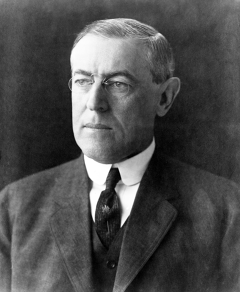
Congress overrode President Woodrow Wilson's veto on October 28, 1919, passing the National Prohibition Act and setting in motion the most ambitious social experiment in American history. The law, drafted by Anti-Saloon League attorney Wayne Wheeler and named for House Judiciary Committee chairman Andrew Volstead of Minnesota, provided the enforcement machinery for the Eighteenth Amendment, defining "intoxicating liquor" as any beverage containing more than 0.5 percent alcohol and establishing penalties for its manufacture, sale, and transport. Wilson's veto was a formality. The Eighteenth Amendment had been ratified by 46 of the 48 states in January 1919 with overwhelming margins, riding a wave of temperance sentiment that had been building for nearly a century. The movement drew support from an unlikely coalition: Protestant evangelicals who saw alcohol as the devil's instrument, progressive reformers who blamed saloons for urban poverty and political corruption, industrialists like Henry Ford who wanted sober workers, and suffragists who linked alcohol to domestic violence against women. The Volstead Act took effect on January 17, 1920, and Americans immediately began finding ways around it. The law permitted alcohol for religious sacraments, medical prescriptions, and industrial use, and each loophole was exploited ruthlessly. Prescriptions for "medicinal whiskey" skyrocketed. Churches reported surges in communion wine consumption. Industrial alcohol was diverted and redistilled for drinking, sometimes with lethal adulterants. More consequentially, Prohibition created the conditions for organized crime on a scale previously unknown in America. Bootlegging operations run by figures like Al Capone in Chicago, Lucky Luciano in New York, and the Purple Gang in Detroit generated enormous profits and corrupted police departments, judges, and politicians across the country. The murder rate rose sharply. Federal enforcement was chronically underfunded: the Prohibition Bureau employed fewer than 3,000 agents to police a nation of 100 million people. Public support for Prohibition eroded steadily through the 1920s and collapsed entirely during the Great Depression, when the lost tax revenue from legal alcohol sales became intolerable. The Twenty-First Amendment, ratified in December 1933, repealed the Eighteenth, making Prohibition the only constitutional amendment ever reversed. The thirteen-year experiment demonstrated that outlawing a widely desired substance does not eliminate demand; it merely transfers the supply to criminals.
October 28, 1919
107 years ago
Key Figures & Places
What Else Happened on October 28
The Praetorian Guard forced Emperor Nerva to adopt Trajan as his heir. Nerva was 66 and childless. The Guard had murdered his predecessor. They wanted a militar…
Maxentius declared himself Roman Emperor after his father's failed comeback attempt. The Praetorian Guard backed him. Rome's citizens backed him. The actual emp…
Constantine marched his outnumbered army across the Milvian Bridge over the Tiber River on October 28, 312 AD, and routed the forces of his rival Maxentius in a…
Visigothic forces sacked Braga, capital of the Suevi kingdom in northwest Iberia. They burned the city's churches to the ground. The Suevi had converted to Cath…
Byzantine general Michael Bourtzes scaled Antioch's walls at night with a small force and seized two towers. The city had been in Arab hands for 340 years. Bour…
Byzantine forces recaptured Antioch in 969 after 333 years of Arab rule. Emperor Nikephoros II Phokas sent his best general, Michael Bourtzes, who climbed the w…
Talk to History
Have a conversation with historical figures who witnessed this era. Ask questions, explore perspectives, and bring history to life.