

U-2 Shot Down Over Cuba: Missile Crisis Peaks
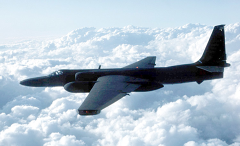
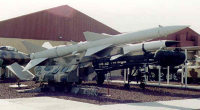
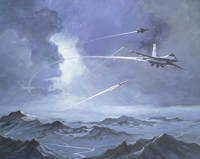
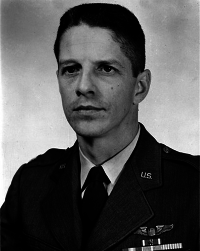
Major Rudolf Anderson Jr., flying a U-2 reconnaissance aircraft at 72,000 feet over eastern Cuba on the morning of October 27, 1962, was killed when a Soviet-supplied SA-2 Guideline surface-to-air missile detonated near his plane, blowing off a wing and sending the aircraft spiraling into Cuban jungle. Anderson became the only combat fatality of the Cuban Missile Crisis and his death brought the world closer to nuclear war than any other single incident during those thirteen days. October 27, known within the Kennedy administration as "Black Saturday," was the most dangerous day of the crisis. Anderson's shootdown was not the only provocation. A separate U-2 strayed into Soviet airspace over Siberia during a routine air-sampling mission, prompting Soviet fighters to scramble. American fighter-interceptors armed with nuclear air-to-air missiles launched from Alaska to escort the wayward U-2 home. In Cuba, Soviet submarine B-59, depth-charged by American destroyers and unable to communicate with Moscow, came within one officer's dissenting vote of launching a nuclear torpedo. The decision to fire the SA-2 that killed Anderson was made locally by Soviet Lieutenant General Stepan Grechko and his deputy, without authorization from Moscow. Khrushchev had explicitly ordered that the missiles not be fired without his approval. When he learned of the shootdown, the Soviet premier was reportedly furious, recognizing that a single unauthorized action by a field commander had nearly forced both superpowers into an escalatory spiral neither could control. The ExComm, Kennedy's crisis advisory group, debated an immediate retaliatory airstrike on the SAM site that had downed Anderson. The Joint Chiefs unanimously recommended a full-scale air attack on Cuba followed by invasion. Kennedy resisted, choosing instead to intensify diplomatic pressure through a back-channel deal: the U.S. would publicly pledge not to invade Cuba and privately agree to remove Jupiter missiles from Turkey, in exchange for Soviet withdrawal of missiles from Cuba. Khrushchev accepted the next morning. Anderson was posthumously awarded the first Air Force Cross ever presented. His death, and the cascade of near-misses that surrounded it on Black Saturday, demonstrated how close the world had come to annihilation through miscalculation, unauthorized action, and the fog of crisis.
October 27, 1962
64 years ago
Key Figures & Places

Cuba
Wikipedia
United States Air Force
Wikipedia
Lockheed U-2
Wikipedia
Cuban Missile Crisis
Wikipedia
Rudolph Anderson
Wikipedia
SA-2 Guideline
Wikipedia
surface-to-air missile
Wikipedia
Rudolf Anderson
Wikipedia

Rudolf Anderson
Wikipedia

Cuban Missile Crisis
Wikipedia

Oriente Province
Wikipedia
Soviet Union
Wikipedia

Vasily Arkhipov
Wikipedia
Torpedo nuclear
Wikipedia

Nuclear warfare
Wikipedia

John F. Kennedy
Wikipedia

Nikita Khrushchev
Wikipedia

Cuba
Wikipedia

United States
Wikipedia

Ballistic missile
Wikipedia

Turkey
Wikipedia

كيفانش تاتليتوغ
Wikipedia
What Else Happened on October 27
Constantine the Great reportedly saw a radiant cross in the sky above the sun before his battle against Maxentius. This vision compelled him to adopt the Chi-Rh…
Saracen raiders landed on Sardinia's southern coast. They burned villages, seized captives for slave markets, destroyed churches. The island had no unified defe…
Æthelstan, the architect of a unified England, died at Gloucester, leaving behind a consolidated kingdom that had successfully repelled Viking incursions. His h…
Amsterdam traces its founding to 1275, when residents received a toll exemption from Count Floris V. The settlement was just a fishing village built on a dam ac…
French troops surrounded Pavia, trapping Spanish and Imperial forces inside. The siege lasted four months through winter. Soldiers ate rats, then leather, then …
Geneva authorities executed Michael Servetus for heresy after he rejected the doctrine of the Trinity and infant baptism. His death ignited a fierce intellectua…
Talk to History
Have a conversation with historical figures who witnessed this era. Ask questions, explore perspectives, and bring history to life.