Erie Canal Opens: NY Becomes America's Trade Hub
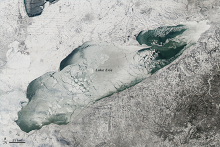
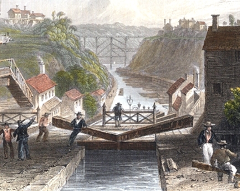
Governor DeWitt Clinton poured a keg of Lake Erie water into the Atlantic Ocean at Sandy Hook, New Jersey, on November 4, 1825, completing the symbolic "Wedding of the Waters" that celebrated the opening of the Erie Canal. The canal itself had opened for full navigation on October 26, when Clinton's flotilla departed Buffalo for the 363-mile journey to Albany, a trip that took nine days along a man-made waterway carved through wilderness, swamp, and solid rock. The Erie Canal was the most ambitious infrastructure project in the young American republic. Clinton had championed it for years despite widespread ridicule. Thomas Jefferson had dismissed the idea as "little short of madness," and critics called it "Clinton's Ditch." The canal required cutting a channel 40 feet wide and 4 feet deep across the entire breadth of New York State, from Lake Erie at Buffalo to the Hudson River at Albany, traversing a 571-foot elevation change through 83 locks. Construction began in 1817 using almost entirely manual labor: Irish immigrants, local farmers, and free Black workers dug the channel with shovels, picks, and horse-drawn scrapers. The engineering challenges were formidable. Workers cut through the Montezuma Marshes, a malarial swamp that killed hundreds from fever. At Lockport, they blasted through a solid rock ridge using newly developed black powder techniques. The entire project was completed in eight years at a cost of $7.1 million, roughly $200 million in today's dollars, without a single trained civil engineer on the payroll. Most of the builders learned engineering on the job, creating an entirely new profession in America. The canal's economic impact was transformational. Shipping costs between Buffalo and New York City dropped from $100 per ton to $10 per ton almost overnight. Grain from the Midwest could now reach Eastern markets cheaply, and manufactured goods flowed west at prices frontier settlers could afford. New York City, already a major port, became the undisputed commercial capital of the United States. Towns along the canal route, including Syracuse, Rochester, and Utica, boomed. The Erie Canal made New York the Empire State and demonstrated that public investment in infrastructure could generate enormous private wealth.
October 26, 1825
201 years ago
Key Figures & Places
What Else Happened on October 26
Roman soldiers arrested Demetrius during Emperor Diocletian's persecution of Christians. He was a deacon in Thessaloniki, secretly baptizing converts. They lock…
The earthquake hit Constantinople at dawn. The city walls cracked. The aqueduct collapsed. Thousands died in their homes. Emperor Leo III was in the palace when…
The brothers Asen and Peter launched their rebellion against Byzantine rule during the feast of St. Demetrius, cleverly using the saint's celebration to rally l…
John VI Kantakouzenos proclaimed himself Byzantine Emperor at Didymoteicho, starting a six-year civil war. Emperor Andronikos III had just died. His son was nin…
Tvrtko I crowned himself king of Bosnia on October 26, 1377 in a monastery near his capital. He claimed descent from Serbian royalty that didn't exist. The crow…
Charles V's coronation in 1520 made him Holy Roman Emperor at 20. He already ruled Spain, the Netherlands, Austria, Naples, and most of the Americas. His empire…
Talk to History
Have a conversation with historical figures who witnessed this era. Ask questions, explore perspectives, and bring history to life.