

Battle of Agincourt: Henry V's Archers Crush the French Knights
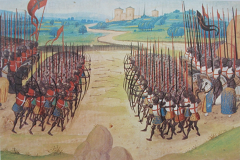
Henry V's outnumbered English army shatters a French force at Agincourt, crushing the nobility and securing a decisive victory that fuels claims to the French throne for decades. This rout dismantles the myth of French invincibility and forces the Treaty of Troyes, which temporarily places the English king on the French royal succession.
October 25, 1415
611 years ago
Key Figures & Places

What Else Happened on October 25
Crispin and Crispinian were Roman brothers who preached Christianity while working as shoemakers, giving shoes to the poor. Emperor Diocletian ordered them drow…
Emperor Leo I elevated his seven-year-old grandson, Leo II, to the rank of Caesar, securing the succession of the Thracian dynasty. This calculated move bypasse…
bataille de Poitiers qui voit une victoire des Francs, des Aquitains et des Vascons sur des Arabes omeyyades.
sacre de Louis VII le Jeune.
Crusader knights conquered Lisbon after a four-month siege, helping King Afonso I of Portugal push back Muslim rule. The crusaders were actually headed for the …

The siege lasted four months. English and Flemish Crusaders, sailing to the Holy Land, stopped to help King Afonso take Lisbon from the Moors. They built siege …
Talk to History
Have a conversation with historical figures who witnessed this era. Ask questions, explore perspectives, and bring history to life.