Telegraph Reaches West: Pony Express Dies
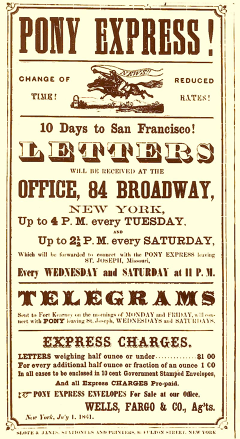
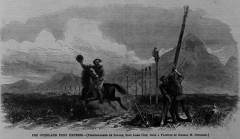
A telegraph operator in Salt Lake City connected the final segment of wire on October 24, 1861, completing the first transcontinental telegraph line and instantly linking the Atlantic and Pacific coasts in real-time communication. The Pony Express, which had been carrying mail between Missouri and California for just eighteen months, was immediately obsolete. Its last rider had already made his final run two days earlier. The project had been authorized by the Pacific Telegraph Act of 1860, which offered the contracting companies a $40,000 annual government subsidy for ten years. Western Union built eastward from Omaha, Nebraska, while the Overland Telegraph Company strung wire westward from Carson City, Nevada. Crews worked through brutal conditions across the Great Plains and the Rocky Mountains, setting poles and stringing copper wire at a pace of several miles per day. Native American tribes sometimes cut the wire or toppled poles, but the companies hired armed guards and negotiated treaties to keep the lines intact. The completion ceremony was practical rather than ceremonial. California Chief Justice Stephen Field sent the first transcontinental message to President Abraham Lincoln, pledging the state's loyalty to the Union. The timing was critical: the Civil War had been raging for six months, and California's gold was vital to the Union war effort. Instant communication with Sacramento meant Washington could coordinate with the Pacific coast in minutes rather than the ten days required by Pony Express. The economic and military consequences were immediate. Stock prices and commodity quotes moved across the continent at the speed of electricity. Military commanders could relay orders without waiting for couriers. Newspapers published dispatches from distant correspondences the same day events occurred. Western Union's stock soared. The telegraph did for the nineteenth century what the internet would do for the twentieth: it collapsed distance and made simultaneity possible across an entire continent. The Pony Express, celebrated in American mythology, had been a stopgap technology all along.
October 24, 1861
165 years ago
Key Figures & Places
What Else Happened on October 24
Vespasian’s legions crushed the forces of Emperor Vitellius at the Second Battle of Bedriacum, ending the chaotic Year of the Four Emperors. This decisive victo…
Vitellius had held Rome for eight months. His soldiers were drunk and undisciplined. Antonius Primus commanded legions from the Danube—hardened troops who'd bee…
Afonso Henriques took Lisbon back from the Moors with help from 13,000 Crusaders who'd stopped on their way to the Holy Land. The siege lasted four months. The …
The cathedral had burned in 1194. Only the crypt and west facade survived. Rebuilding took 66 years. King Louis IX attended the dedication with his entire court…
Qutuz had stopped the Mongols at Ain Jalut two months earlier, the first time anyone had defeated them in open battle. He was returning to Cairo in triumph. Bai…
Chartres Cathedral was dedicated on October 24, 1260, in the presence of King Louis IX—Saint Louis. Construction had taken 66 years. The previous cathedral burn…
Talk to History
Have a conversation with historical figures who witnessed this era. Ask questions, explore perspectives, and bring history to life.