

Third Partition of Poland: Nation Erased From Map
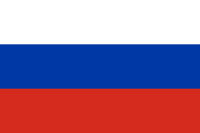
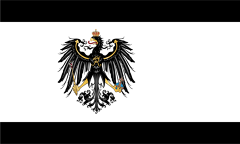
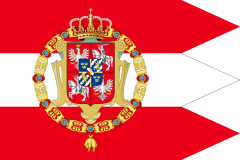
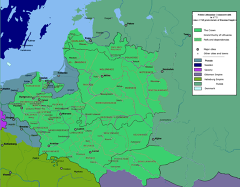
Russia, Prussia, and Austria signed the Third Partition treaty on October 24, 1795, erasing the Polish-Lithuanian Commonwealth from the map of Europe entirely. A state that had existed for more than 800 years, that had once been the largest country in Europe and a center of Renaissance learning and religious tolerance, ceased to exist. Poland would not reappear as an independent nation for 123 years. The partitions had proceeded in stages. The First Partition of 1772 stripped Poland of roughly a third of its territory, divided among the three neighboring empires. Polish reformers responded with the Constitution of May 3, 1791, the first modern written constitution in Europe and a bold attempt to strengthen the central government and abolish the liberum veto that had paralyzed Polish politics for generations. Russia, alarmed that a reformed Poland might become strong enough to resist further encroachment, invaded in 1792 and imposed the Second Partition, which took another large swath of territory. Polish patriots, led by Tadeusz Kosciuszko, launched an armed uprising in 1794 to preserve what remained of the country. Kosciuszko, who had served as a military engineer during the American Revolution, rallied peasants and townspeople to fight alongside the regular army. The insurrection scored early victories, including the liberation of Warsaw and a dramatic stand at Raclawice, but the combined weight of Russian and Prussian forces proved overwhelming. Kosciuszko was wounded and captured at the Battle of Maciejowice, and Russian troops under Alexander Suvorov stormed the Warsaw suburb of Praga, massacring thousands of civilians. The Third Partition formalized the annihilation. Russia took the largest share, Prussia absorbed Warsaw and central Poland, and Austria claimed the southern region around Krakow. King Stanislaw August Poniatowski, the last ruler of independent Poland, was forced to abdicate and spent his remaining years in Russian captivity. Poles would spend the next century attempting to restore their state through uprisings in 1830, 1848, and 1863, all of which failed. Only the simultaneous collapse of all three partitioning empires in World War I created the conditions for Poland's resurrection in 1918.
October 24, 1795
231 years ago
Key Figures & Places

What Else Happened on October 24
Vespasian’s legions crushed the forces of Emperor Vitellius at the Second Battle of Bedriacum, ending the chaotic Year of the Four Emperors. This decisive victo…
Vitellius had held Rome for eight months. His soldiers were drunk and undisciplined. Antonius Primus commanded legions from the Danube—hardened troops who'd bee…
Afonso Henriques took Lisbon back from the Moors with help from 13,000 Crusaders who'd stopped on their way to the Holy Land. The siege lasted four months. The …
The cathedral had burned in 1194. Only the crypt and west facade survived. Rebuilding took 66 years. King Louis IX attended the dedication with his entire court…
Qutuz had stopped the Mongols at Ain Jalut two months earlier, the first time anyone had defeated them in open battle. He was returning to Cairo in triumph. Bai…
Chartres Cathedral was dedicated on October 24, 1260, in the presence of King Louis IX—Saint Louis. Construction had taken 66 years. The previous cathedral burn…
Talk to History
Have a conversation with historical figures who witnessed this era. Ask questions, explore perspectives, and bring history to life.