

Marines Fall to Truck Bomb: Beirut Claims 241 Lives
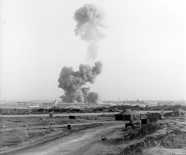
A yellow Mercedes truck packed with the equivalent of 12,000 pounds of TNT drove through a parking lot, crashed through a gate, and detonated inside the lobby of the U.S. Marine barracks at Beirut International Airport at 6:22 a.m. on October 23, 1983. The explosion, one of the largest non-nuclear blasts ever recorded, lifted the four-story concrete building off its foundation and collapsed it into rubble. Two hundred and forty-one American servicemen died in their sleep. Two minutes later, a second truck bomb struck the French paratroop barracks four miles away, killing 58 French soldiers and collapsing their nine-story building. The coordinated attacks were the deadliest single-day loss for the U.S. Marine Corps since the Battle of Iwo Jima in 1945, and the worst military loss for France since the Algerian War. The Marines had been deployed to Beirut in August 1982 as part of a multinational peacekeeping force intended to stabilize Lebanon during its civil war. Their mission was deliberately limited: maintain a "presence" and avoid taking sides among the country's warring factions. But the deployment placed American troops in an exposed position with restrictive rules of engagement. Sentries at the barracks compound were not permitted to carry loaded weapons, a policy that left them unable to stop the truck bomber. An FBI forensic team determined that the bomb used a gas-enhanced explosive device, likely built with technical assistance from Iran's Revolutionary Guard Corps operating in Lebanon's Bekaa Valley. The shadowy organization that carried out the attack would later become known as Hezbollah. A simultaneous investigation by a Department of Defense commission found inadequate security measures at the barracks and a chain-of-command failure in assessing the threat. President Ronald Reagan withdrew American forces from Lebanon by February 1984. The Beirut bombing became a template for asymmetric warfare against Western military forces and demonstrated that a single truck bomb could alter the strategic calculus of a superpower.
October 23, 1983
43 years ago
Key Figures & Places

France
Wikipedia
United States Marine Corps
Wikipedia

Lebanon
Wikipedia
Beirut
Wikipedia
Lebanese Civil War
Wikipedia
Lebanon Civil War
Wikipedia
1983 Beirut barracks bombing
Wikipedia

Lebanese Civil War
Wikipedia

US Marines
Wikipedia

1983 Beirut barracks bombings
Wikipedia

French Army
Wikipedia

Hezbollah
Wikipedia

Beirut, Lebanon
Wikipedia

Lebanon
Wikipedia

France
Wikipedia

Southern Lebanon
Wikipedia

United States
Wikipedia
What Else Happened on October 23
Archbishop James Ussher calculated that God created the world on October 23, 4004 BC, at nightfall preceding Sunday. He worked backward through Biblical genealo…
Brutus's army collapsed at Philippi in 42 BC, three weeks after his co-commander Cassius had killed himself following a defeat. Brutus ran himself through with …
Mark Antony and Octavian decisively defeated Brutus at the second Battle of Philippi on October 23, 42 BC, three weeks after the inconclusive first engagement. …
Six-year-old Valentinian III ascended the throne as Western Roman Emperor, placing the imperial administration under the firm control of his mother, Galla Placi…
The Synodus Palmaris cleared Pope Symmachus of all charges. King Theoderic the Great had called the council after rivals accused Symmachus of celebrating Easter…
The Synodus Palmaris acquitted Pope Symmachus in 502 of all charges brought by Antipope Laurentius, ending a four-year schism. Gothic King Theodoric the Great c…
Talk to History
Have a conversation with historical figures who witnessed this era. Ask questions, explore perspectives, and bring history to life.