

Houdini Sucker-Punched: Blow That Sealed His Fate
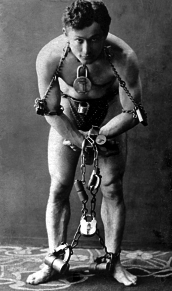
J. Gordon Whitehead, a McGill University student, walked into Harry Houdini's dressing room at the Princess Theatre in Montreal on October 22, 1926, and asked the world's most famous escape artist whether it was true that he could withstand any blow to the stomach. Before Houdini could properly brace himself, Whitehead delivered several hard punches to his abdomen. The blows almost certainly ruptured Houdini's already-inflamed appendix, setting in motion the infection that would kill him nine days later. Houdini, born Erik Weisz in Budapest in 1874, had spent three decades building a reputation as the greatest showman of his age. He had escaped from handcuffs, straitjackets, locked trunks submerged in rivers, and a sealed milk can filled with water. He had been buried alive and hung upside down from skyscrapers. His physical endurance was central to his mystique, and he regularly invited audience members to punch him in the stomach to demonstrate his muscular control. What Whitehead did not know was that Houdini had been experiencing abdominal pain for days before the Montreal incident, likely from an appendicitis already in progress. The punches aggravated the condition severely. Houdini performed through escalating pain over the next several days, including a show in Detroit on October 24 where he reportedly had a fever of 104 degrees. He finally consented to go to Grace Hospital after collapsing backstage. Surgeons removed his ruptured appendix, but peritonitis had already spread through his abdominal cavity. Houdini fought the infection for days, reportedly telling his brother from his hospital bed, "I'm tired of fighting." He died on October 31, 1926, Halloween night, at the age of 52. The timing cemented his legend, forever linking the master of illusion with the holiday of ghosts and the supernatural. His death also helped spur reforms in how physical stunts were managed in theatrical performances.
October 22, 1926
100 years ago
Key Figures & Places
What Else Happened on October 22
A mysterious fire razed the temple of Apollo at Daphne, silencing one of the Roman Empire’s most celebrated oracles. Emperor Julian blamed local Christians for …
The Council of Chalcedon defined Christ as one person in two natures, fully divine and fully human, united without confusion or change. The formula was a compro…
The Council of Chalcedon finalized the definition of Christ’s dual nature as fully divine and fully human. This theological consensus fractured the early Church…
Emperor Kanmu moved Japan's capital to Heiankyo in 794 to escape the political power of Buddhist monasteries in Nara. The monks had grown too influential, too r…
Abbasid general Ahmad ibn Kayghalagh raided Byzantine territory in 906, penetrating deep into Anatolia and returning with 4,000 to 5,000 captives. The raid was …
Portuguese King Fernando died without a male heir in 1383, triggering a succession crisis. His widow claimed the throne for her daughter, who was married to the…
Talk to History
Have a conversation with historical figures who witnessed this era. Ask questions, explore perspectives, and bring history to life.