

Von Braun Joins NASA: America's Space Race Ignites
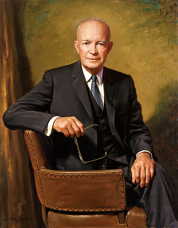
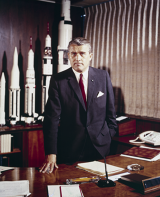
Wernher von Braun, the German rocket engineer who had built the V-2 missiles that terrorized London during World War II, officially became an American space pioneer on October 21, 1959, when President Dwight Eisenhower signed an executive order transferring him and roughly 4,000 colleagues from the U.S. Army's ballistic missile program to the newly created National Aeronautics and Space Administration. Von Braun had arrived in the United States in 1945 as part of Operation Paperclip, the secret program that brought more than 1,600 German scientists and engineers to America ahead of Soviet capture. For fourteen years he worked under Army auspices at Fort Bliss, Texas, and then the Redstone Arsenal in Huntsville, Alabama, developing intermediate-range ballistic missiles while lobbying relentlessly for a civilian space program. His team had launched America's first satellite, Explorer I, in January 1958 using a modified Redstone rocket, partly redeeming national pride after the Sputnik shock. The transfer brought von Braun's group and their facilities under NASA's Marshall Space Flight Center, with von Braun as its first director. He immediately began work on the Saturn family of launch vehicles, the heavy-lift rockets that would eventually carry astronauts to the Moon. His engineering philosophy of exhaustive testing and conservative reliability margins shaped NASA's entire approach to human spaceflight. Von Braun's dual legacy remains uncomfortable. The V-2 program that established his reputation was built with slave labor from the Mittelbau-Dora concentration camp, where an estimated 20,000 prisoners died. Yet the Saturn V rocket his team produced remains the most powerful launch vehicle ever successfully flown, and no American reached orbit or walked on the Moon without technology that traced directly to his Huntsville laboratories. The 1959 transfer was the bureaucratic stroke that pointed German rocketry toward the stars instead of the battlefield.
October 21, 1959
67 years ago
Key Figures & Places

What Else Happened on October 21
Pope Eusebius died in exile on Sicily just sixty-five days after Emperor Maxentius banished him for his rigid stance on readmitting apostates to the church. His…
The People's Crusade never made it to Jerusalem. Peasants, not knights—untrained, poorly armed, following a preacher named Peter the Hermit. They reached Consta…
The People's Crusade reached Anatolia in 1096 — 20,000 peasants, barely armed, led by a charismatic preacher named Peter the Hermit. They'd marched from Europe …
The People's Crusade ended in a Turkish ambush on October 21, 1096. Peter the Hermit had led 40,000 peasants to Constantinople without armor or training. They'd…
Crusader armies began the siege of Antioch with no siege equipment. The city's walls were 30 feet high and studded with 400 towers. The Crusaders had no navy to…
Pope Innocent III crowned Otto IV as Holy Roman Emperor in Rome, formalizing his authority over the fractured German territories. This alliance proved fragile, …
Talk to History
Have a conversation with historical figures who witnessed this era. Ask questions, explore perspectives, and bring history to life.