Wright's Spiral Opens: Guggenheim Museum Debuts
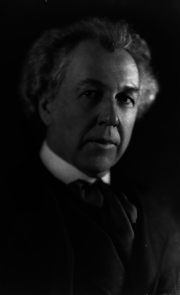
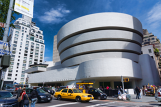
Frank Lloyd Wright's final masterpiece stood on Fifth Avenue like nothing New York had ever seen: a white concrete spiral rising from the sidewalk, its curves defying every right angle in Manhattan's rigid grid. When the Solomon R. Guggenheim Museum opened on October 21, 1959, visitors stepped inside to find a single continuous ramp winding six stories upward around an open atrium flooded with natural light from a glass dome above. Wright had first received the commission in 1943 from Solomon Guggenheim and his art advisor, Hilla von Rebay, who wanted a "temple of the spirit" for their growing collection of non-objective painting. The architect spent sixteen years refining and defending his radical design against skeptical city building officials, hostile neighbors, and even some of the artists whose work would hang inside. Twenty-one prominent painters, including Willem de Kooning and Robert Motherwell, signed a letter protesting the building's concave walls and sloping floors, arguing they would distort the viewing experience. Wright never saw the public's verdict. He died in April 1959, six months before the museum's opening. Solomon Guggenheim himself had died a decade earlier, in 1949. The building they envisioned together opened to enormous crowds and immediate controversy. Critics called it everything from a "washing machine" to an "inverted oatmeal dish." The New York Times architecture critic described it as Wright's greatest work. The Guggenheim became one of the most visited and photographed buildings in America, drawing millions who came as much for the architecture as for the Kandinsky and Mondrian paintings on its walls. UNESCO designated it a World Heritage Site in 2019, recognizing it as one of the twentieth century's most influential structures. Wright had wanted to prove that a building could be a work of art in itself. The spiral on Fifth Avenue settled the argument.
October 21, 1959
67 years ago
Key Figures & Places
What Else Happened on October 21
Pope Eusebius died in exile on Sicily just sixty-five days after Emperor Maxentius banished him for his rigid stance on readmitting apostates to the church. His…
The People's Crusade never made it to Jerusalem. Peasants, not knights—untrained, poorly armed, following a preacher named Peter the Hermit. They reached Consta…
The People's Crusade reached Anatolia in 1096 — 20,000 peasants, barely armed, led by a charismatic preacher named Peter the Hermit. They'd marched from Europe …
The People's Crusade ended in a Turkish ambush on October 21, 1096. Peter the Hermit had led 40,000 peasants to Constantinople without armor or training. They'd…
Crusader armies began the siege of Antioch with no siege equipment. The city's walls were 30 feet high and studded with 400 towers. The Crusaders had no navy to…
Pope Innocent III crowned Otto IV as Holy Roman Emperor in Rome, formalizing his authority over the fractured German territories. This alliance proved fragile, …
Talk to History
Have a conversation with historical figures who witnessed this era. Ask questions, explore perspectives, and bring history to life.