

Ball's Bluff: Lincoln's Close Friend Dies in Battle
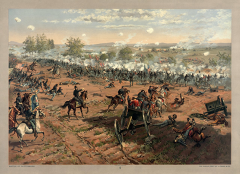
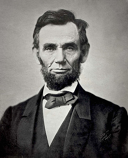
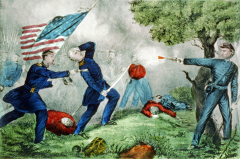
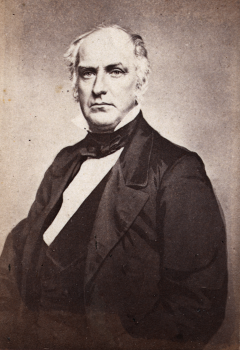
Colonel Edward Dickinson Baker, a sitting U.S. Senator from Oregon and one of Abraham Lincoln's closest personal friends, led his troops up a steep, wooded bluff overlooking the Potomac River on October 21, 1861, and walked into a disaster that would reshape how the Union fought the Civil War. Confederate forces under Colonel Nathan Evans had drawn the Federals into a trap at Ball's Bluff, Virginia, where the terrain left them no room to maneuver and no easy retreat. The engagement began as a reconnaissance-in-force ordered by Brigadier General Charles Stone. Baker, who held both military and political rank, took personal command of the crossing and pushed roughly 1,700 Union soldiers up the hundred-foot bluff with only three small boats available for reinforcement or withdrawal. When the Confederates counterattacked in the late afternoon, the Union line broke. Soldiers tumbled down the cliff face toward the river, where many drowned attempting to swim back to Maryland in full equipment. Baker was shot through the head during the rout and became the only sitting U.S. Senator killed in combat in American history. His body was carried back across the Potomac, and when Lincoln received the news at the War Department telegraph office, witnesses reported the president emerged weeping openly, one of the few times he displayed such public grief during the war. The political fallout proved more consequential than the military outcome. Congress, outraged by the defeat and suspicious of General Stone's loyalties, created the Joint Committee on the Conduct of the War, a powerful oversight body that would investigate military commanders and influence strategy for the remainder of the conflict. Stone himself was arrested and imprisoned for months without formal charges. Ball's Bluff was a small battle by later standards, but it taught Washington that the war would be neither short nor easy.
October 21, 1861
165 years ago
Key Figures & Places


What Else Happened on October 21
Pope Eusebius died in exile on Sicily just sixty-five days after Emperor Maxentius banished him for his rigid stance on readmitting apostates to the church. His…
The People's Crusade never made it to Jerusalem. Peasants, not knights—untrained, poorly armed, following a preacher named Peter the Hermit. They reached Consta…
The People's Crusade reached Anatolia in 1096 — 20,000 peasants, barely armed, led by a charismatic preacher named Peter the Hermit. They'd marched from Europe …
The People's Crusade ended in a Turkish ambush on October 21, 1096. Peter the Hermit had led 40,000 peasants to Constantinople without armor or training. They'd…
Crusader armies began the siege of Antioch with no siege equipment. The city's walls were 30 feet high and studded with 400 towers. The Crusaders had no navy to…
Pope Innocent III crowned Otto IV as Holy Roman Emperor in Rome, formalizing his authority over the fractured German territories. This alliance proved fragile, …
Talk to History
Have a conversation with historical figures who witnessed this era. Ask questions, explore perspectives, and bring history to life.