Trafalgar Secures Britain: Nelson's Final Victory
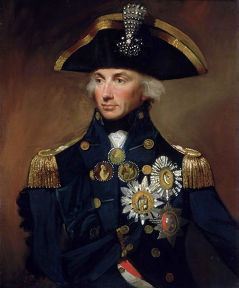
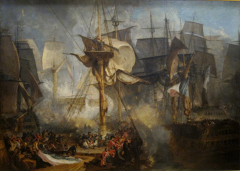
Twenty-seven British ships of the line sailed into a combined Franco-Spanish fleet of thirty-three off Cape Trafalgar on the morning of October 21, 1805, and by nightfall had captured or destroyed twenty-two enemy vessels without losing a single one of their own. Vice Admiral Horatio Nelson, commanding from HMS Victory, had devised the unorthodox tactic of splitting his fleet into two columns and driving them perpendicular into the enemy line, shattering the traditional formation and denying the French and Spanish any chance to regroup. The engagement was the climax of Napoleon Bonaparte's long struggle to gain naval superiority over Britain and mount a cross-Channel invasion. For two years, French Admiral Pierre-Charles Villeneuve had attempted to consolidate enough warships to escort an invasion force, but persistent British blockades and Nelson's relentless pursuit across the Atlantic and Mediterranean forced Villeneuve into the defensive anchorage at Cadiz. When Villeneuve finally put to sea under orders from an impatient Napoleon, he sailed directly into Nelson's trap. The battle lasted roughly five hours and cost the lives of some 4,400 French and Spanish sailors against about 450 British dead. Nelson himself was struck by a musket ball fired from the French ship Redoutable during the thick of the fighting and died below decks aboard Victory shortly before the battle concluded. His final confirmed words, "Thank God I have done my duty," passed into British legend almost immediately. Trafalgar's consequences extended far beyond one afternoon of carnage at sea. Napoleon abandoned his invasion plans permanently and turned his armies eastward toward Austerlitz. Britain secured unchallenged maritime dominance that would last more than a century, enabling the expansion of its empire and the protection of global trade routes. Nelson's column in London's Trafalgar Square, erected in 1843, still stands as a monument to the victory that made Britain the world's supreme naval power.
October 21, 1805
221 years ago
Key Figures & Places

What Else Happened on October 21
Pope Eusebius died in exile on Sicily just sixty-five days after Emperor Maxentius banished him for his rigid stance on readmitting apostates to the church. His…
The People's Crusade never made it to Jerusalem. Peasants, not knights—untrained, poorly armed, following a preacher named Peter the Hermit. They reached Consta…
The People's Crusade reached Anatolia in 1096 — 20,000 peasants, barely armed, led by a charismatic preacher named Peter the Hermit. They'd marched from Europe …
The People's Crusade ended in a Turkish ambush on October 21, 1096. Peter the Hermit had led 40,000 peasants to Constantinople without armor or training. They'd…
Crusader armies began the siege of Antioch with no siege equipment. The city's walls were 30 feet high and studded with 400 towers. The Crusaders had no navy to…
Pope Innocent III crowned Otto IV as Holy Roman Emperor in Rome, formalizing his authority over the fractured German territories. This alliance proved fragile, …
Talk to History
Have a conversation with historical figures who witnessed this era. Ask questions, explore perspectives, and bring history to life.