Meiji Restoration: Japan Abolishes the Shogunate
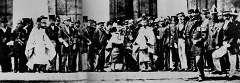
Commodore Matthew Perry''s black ships had arrived in Edo Bay in 1853, and the shock had not faded. For 265 years, the Tokugawa shoguns had sealed Japan from the outside world, maintaining order through a rigid feudal hierarchy that kept the emperor as a figurehead in Kyoto and real power in the shogun''s castle in Edo. Perry''s steam-powered warships demonstrated, with devastating clarity, that Japanese isolation had left the country militarily helpless against Western technology. Young samurai from the powerful Satsuma and Choshu domains concluded that the Tokugawa system had to be destroyed. On January 3, 1868, they seized the imperial palace in Kyoto and announced they were restoring direct rule to Emperor Meiji. The emperor was fifteen years old and almost certainly did not understand the full scope of what was happening around him. The word "restoration" was deliberately misleading. Nothing was being restored to any previous state. The Boshin War that followed was brief and decisive. Tokugawa loyalists fought back but were defeated within eighteen months. The real revolution came after the fighting stopped. The new government abolished the feudal domains and replaced them with prefectures. They eliminated the samurai class entirely, stripping 1.9 million warriors of their hereditary stipends and their right to carry swords. They conscripted a modern army from commoners, built railways, established a national postal system, and sent delegations to study Western governments, factories, and universities. The speed of Japan''s transformation remains unmatched in modern history. Within forty years, the country went from an isolated agrarian society to a global military power capable of defeating Russia in the Russo-Japanese War of 1905. The Meiji Restoration was not a return to the past. It was one of the most radical acts of national reinvention ever attempted, carried out by men who understood that the only alternative to transformation was colonization.
January 3, 1868
158 years ago
Key Figures & Places

What Else Happened on January 3
Roman legions refused to salute their emperor. On January 3, 69 AD, troops on the Rhine declared Aulus Vitellius emperor instead of Galba. Galba was in Rome, 80…
250 AD: Every person in the Roman Empire had to burn incense to the gods. Except Jews, who had special permission. Everyone else got a certificate proving they'…
Joan of Arc had been captured by Burgundian allies of the English. They sold her to Bishop Pierre Cauchon for 10,000 francs. Cauchon wanted her tried for heresy…
Leonardo's flying machine crashed immediately. He'd spent months calculating wing angles and studying birds. Built a frame of wood and canvas. Tested it from a …
Martin Luther had three years to recant. He refused every time. Pope Leo X tried debates, threats, and diplomatic pressure. Nothing moved the German monk who in…
The Coonan Cross stands in Mattancherry, Kerala. Portuguese missionaries had controlled Indian Christians for 150 years. They banned local customs, imposed Lati…
Talk to History
Have a conversation with historical figures who witnessed this era. Ask questions, explore perspectives, and bring history to life.