Hollywood's Red Scare: Blacklist Hearings Begin
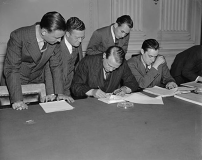
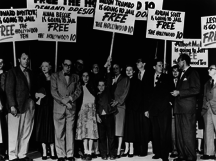
The House Un-American Activities Committee opened its investigation into Communist influence in Hollywood on October 20, 1947, and the American entertainment industry entered a decade of fear, betrayal, and ruined careers. The hearings produced the Hollywood Blacklist — an informal but ruthlessly enforced agreement among studios to deny employment to anyone accused of Communist sympathies — and became one of the most damaging episodes of political repression in American history. HUAC's Hollywood investigation began with "friendly witnesses" who eagerly named suspected Communists. Walt Disney testified that Communist agitators had organized a 1941 strike at his studio. Ronald Reagan, then president of the Screen Actors Guild, named members he considered sympathizers. Actor Adolphe Menjou declared himself a proud "witch hunter." The friendly witnesses painted a picture of an industry infiltrated by Soviet-directed agents using films to spread propaganda to unsuspecting American audiences. Ten writers and directors — the "Hollywood Ten" — refused to answer the committee's questions about their political affiliations, invoking the First Amendment rather than the Fifth. They were cited for contempt of Congress, convicted, and sentenced to prison terms of six months to one year. The studios, terrified of boycotts and congressional regulation, issued the Waldorf Statement in November 1947, declaring that no known Communist would be employed in Hollywood. The Blacklist had begun. Over the next decade, hundreds of actors, writers, directors, and technicians lost their livelihoods. Some, like screenwriter Dalton Trumbo, continued working under pseudonyms at a fraction of their former pay. Others left the country or changed careers entirely. Marriages collapsed, friendships ended, and at least a few people committed suicide. The Committee for the First Amendment, organized by John Huston and including Humphrey Bogart and Lauren Bacall, attempted to protest but quickly buckled under studio pressure. The Blacklist did not formally end until 1960, when Trumbo received screen credit for Spartacus and Exodus. The episode remains a cautionary tale about the fragility of civil liberties during periods of national fear.
October 20, 1947
79 years ago
Key Figures & Places
What Else Happened on October 20
Alonso de Mendoza founded La Paz in a valley 11,975 feet above sea level on orders from Charles V. He named it Nuestra Señora de La Paz—Our Lady of Peace—becaus…
The Duke of Alba crushed William the Silent’s forces at the Battle of Jodoigne, scattering the Dutch rebel army and forcing William into exile. This victory sec…
Cristóbal de Mondragón led 3,000 Spanish soldiers through ten miles of freezing, waist-deep seawater to surprise the Dutch rebels besieging Goes. This daring mi…
Spanish troops waded through fifteen miles of freezing, waist-deep seawater in a single night to reach the besieged city of Goes. This grueling amphibious maneu…
Royal Navy forces captured the pirate John Rackham, known as Calico Jack, off the coast of Jamaica after his crew failed to mount a defense while intoxicated. H…
Maria Theresa inherited the Austrian throne in 1740 at age 23. Her father had spent years securing promises that Europe would accept a female ruler. France, Pru…
Talk to History
Have a conversation with historical figures who witnessed this era. Ask questions, explore perspectives, and bring history to life.