

MacArthur Returns: Philippines Liberation Begins
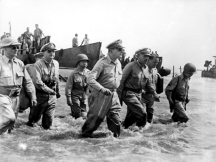
General Douglas MacArthur waded ashore at Red Beach on the island of Leyte on October 20, 1944, stepped up to a Signal Corps microphone, and delivered the message he had waited two and a half years to send: "People of the Philippines, I have returned." The broadcast, carried across the islands by radio, fulfilled the most famous personal promise of World War II and launched the liberation campaign that would reclaim the archipelago from Japanese occupation. MacArthur had fled the Philippines in March 1942 on direct orders from President Roosevelt, leaving behind 76,000 American and Filipino troops who surrendered to the Japanese and endured the Bataan Death March. The fall of the Philippines was the worst American military defeat since the Civil War, and MacArthur's departure — though ordered and militarily sensible — haunted him. His pledge "I shall return" became the defining statement of his career and a rallying cry for Filipino resistance fighters who spent years fighting Japanese occupation. The Leyte invasion was the opening phase of a massive campaign. More than 174,000 troops landed in the first wave, supported by the largest naval armada ever assembled in the Pacific. The Japanese response triggered the Battle of Leyte Gulf, the largest naval engagement in history, spanning four separate actions over three days. The Japanese Navy lost four aircraft carriers, three battleships, and dozens of other warships, ending its ability to contest American control of the Pacific. The liberation of the Philippines came at an enormous human cost. Manila, the capital, was the site of the most devastating urban battle in the Pacific Theater. Japanese forces slaughtered approximately 100,000 Filipino civilians during the Battle of Manila in February-March 1945. Total Philippine civilian casualties during the Japanese occupation and liberation campaign exceeded one million. American losses in the Philippine campaign totaled roughly 14,000 killed. MacArthur's return had been dramatic and personally redemptive, but the war he brought back with him left the islands devastated.
October 20, 1944
82 years ago
Key Figures & Places


What Else Happened on October 20
Alonso de Mendoza founded La Paz in a valley 11,975 feet above sea level on orders from Charles V. He named it Nuestra Señora de La Paz—Our Lady of Peace—becaus…
The Duke of Alba crushed William the Silent’s forces at the Battle of Jodoigne, scattering the Dutch rebel army and forcing William into exile. This victory sec…
Cristóbal de Mondragón led 3,000 Spanish soldiers through ten miles of freezing, waist-deep seawater to surprise the Dutch rebels besieging Goes. This daring mi…
Spanish troops waded through fifteen miles of freezing, waist-deep seawater in a single night to reach the besieged city of Goes. This grueling amphibious maneu…
Royal Navy forces captured the pirate John Rackham, known as Calico Jack, off the coast of Jamaica after his crew failed to mount a defense while intoxicated. H…
Maria Theresa inherited the Austrian throne in 1740 at age 23. Her father had spent years securing promises that Europe would accept a female ruler. France, Pru…
Talk to History
Have a conversation with historical figures who witnessed this era. Ask questions, explore perspectives, and bring history to life.