Moby-Dick Published: Melville's Tale Emerges
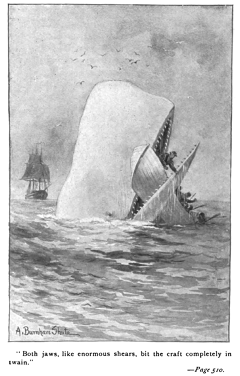
"Call me Ishmael." Three words launched one of the greatest novels in the English language — and one of the most spectacular commercial failures in American literary history. Herman Melville's Moby-Dick was published in London on October 18, 1851, under the title The Whale, and in New York on November 14 as Moby-Dick; or, The Whale. Critics were largely hostile, the public was indifferent, and Melville's career never recovered. Only decades after his death would the novel be recognized as America's epic masterpiece. Melville drew on his own experience as a sailor, particularly an eighteen-month whaling voyage aboard the Acushnet in 1841-42, and on the true story of the Essex, a Nantucket whaler sunk by a sperm whale in 1820. The novel follows Ishmael aboard the Pequod, commanded by the obsessive Captain Ahab, who drives his crew across the world's oceans in a monomaniacal pursuit of the white whale that had severed his leg. The narrative weaves adventure with philosophy, biology, history, and metaphysics in a style that bewildered Victorian readers accustomed to straightforward storytelling. Contemporary critics called it unreadable, pretentious, and mad. One London review dismissed it as "an ill-compounded mixture of romance and matter-of-fact." The American edition sold poorly — fewer than 3,000 copies in Melville's lifetime — and a warehouse fire destroyed most unsold copies in 1853. Melville continued writing but never again achieved even the modest success of his earlier adventure novels. He spent his final decades working as a customs inspector on the New York docks, largely forgotten by the literary world. He died in 1891, and the New York Times obituary misspelled his name. The resurrection of Moby-Dick began in the 1920s, when scholars and critics rediscovered the novel and recognized its extraordinary ambition and originality. By the mid-twentieth century, it was universally regarded as the great American novel — a work that explored obsession, nature, race, labor, and the human condition with a depth and daring that no American writer had attempted before. Ahab's quest has become one of literature's defining metaphors for destructive obsession, and Melville's reputation now towers over the critics who dismissed him.
October 18, 1851
175 years ago
Key Figures & Places

What Else Happened on October 18
Agrippina the Elder starved herself to death on the island of Pandateria on October 18, 33 AD, after Emperor Tiberius banished her for political opposition. She…
Pappus of Alexandria recorded a solar eclipse on this day, using the rare celestial event to refine his mathematical commentary on Ptolemy’s Almagest. His metic…
King Chlothar II issued the Edict of Paris, protecting the rights of Frankish nobles and limiting royal power over the church and aristocracy. It also banned Je…
Dagobert I became King of the Franks at age 33 in 629. His father had given him Austrasia to rule at age 10. Dagobert spent his reign consolidating Frankish ter…
Caliph Al-Hakim bi-Amr Allah ordered the Church of the Holy Sepulchre destroyed in 1009. His workers hacked down to bedrock, trying to obliterate the site Chris…
Cnut the Great crushed the English army at the Battle of Assandun, ending Anglo-Saxon resistance to his rule. This decisive victory forced King Edmund Ironside …
Talk to History
Have a conversation with historical figures who witnessed this era. Ask questions, explore perspectives, and bring history to life.