

Einstein Flees Nazi Germany: Moves to America
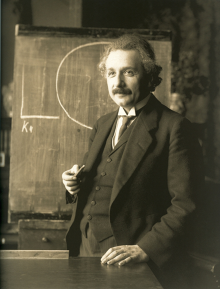
Albert Einstein stepped off a boat in New York on October 17, 1933, and never set foot in Germany again. The most famous scientist in the world had abandoned his homeland after the Nazi regime seized his property, revoked his citizenship, and put a $5,000 bounty on his head. His emigration represented the single most prominent departure in an exodus of intellectual talent that would cripple German science and supercharge American research for generations. Einstein had been living abroad when Hitler became Chancellor in January 1933. He was visiting the United States at the time and immediately recognized the danger. "I shall not step on German soil again," he told his wife Elsa before they sailed back to Europe. He resigned from the Prussian Academy of Sciences and renounced his German citizenship before the Nazis could expel him. The regime confiscated his Berlin apartment and his savings account, and his scientific works were among those publicly burned. The Institute for Advanced Study in Princeton, New Jersey, had offered Einstein a position the previous year, and it became his permanent home. Princeton's quiet college town, so different from the intellectual frenzy of 1920s Berlin, suited Einstein's working style. He spent the remaining twenty-two years of his life there, working on unified field theory, becoming an American citizen in 1940, and lending his prestige to various political and humanitarian causes. Einstein's departure was part of a broader catastrophe for German science. The Nazi purge of Jewish and politically suspect academics drove an estimated 1,500 scholars out of German universities between 1933 and 1939, including eleven Nobel laureates and dozens of future laureates. Many, like Einstein, ended up in the United States, where they transformed American universities into the world's leading research institutions. The irony was profound: the regime that celebrated racial purity drove away the minds that might have built Germany an atomic bomb first. Einstein himself signed the famous 1939 letter to President Roosevelt warning of the possibility of nuclear weapons, helping to launch the Manhattan Project.
October 17, 1933
93 years ago
Key Figures & Places



What Else Happened on October 17
Cyrus the Great entered Babylon without a battle. The city's priests had turned against their own king. Cyrus issued a decree allowing exiled peoples to return …
Ricimer defeated the Roman emperor Avitus near Piacenza with help from Majorian. Avitus had ruled for just 14 months. He fled to a church, was made a bishop aga…
Wu Zetian declared herself emperor of China on October 16th, 690, the only woman to ever claim that title outright. She'd been a concubine, then empress consort…
A tornado tore through London on October 17th, 1091, destroying 600 houses and killing two people. Medieval chroniclers said it lifted the roof off a church and…
King David II of Scotland invaded northern England while Edward III was fighting in France. Bad timing. English forces intercepted him at Neville's Cross near D…
King David II of Scotland invaded England in 1346 while Edward III was busy in France. Bad timing. English forces caught David at Neville's Cross near Durham on…
Talk to History
Have a conversation with historical figures who witnessed this era. Ask questions, explore perspectives, and bring history to life.