

Capone Convicted: Tax Evasion Ends the Kingpin Era
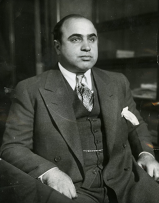
Al Capone controlled a criminal empire that generated an estimated $100 million annually from bootlegging, gambling, and prostitution, but the federal government brought him down with a ledger and a tax form. On October 17, 1931, a Chicago jury convicted the nation's most notorious gangster not of murder, racketeering, or bootlegging, but of income tax evasion — a charge that carried a maximum sentence of five years per count but required far less dangerous evidence than a mob prosecution. Capone had risen from a Brooklyn street tough to the undisputed boss of Chicago's organized crime by 1925, following the retirement of his mentor Johnny Torrio. He expanded bootlegging operations during Prohibition with a combination of business acumen and extreme violence, most infamously ordering the Saint Valentine's Day Massacre of 1929, in which seven rival North Side Gang members were gunned down in a warehouse. Chicago's corrupt political machine under Mayor William "Big Bill" Thompson provided protection, and Capone cultivated a public image as a Robin Hood figure, operating soup kitchens during the Depression. The Valentine's Day Massacre proved his undoing. The national outrage prompted President Herbert Hoover to order law enforcement to take Capone down by any means necessary. Eliot Ness and his "Untouchables" targeted Capone's bootlegging operations, but it was IRS agent Frank Wilson who built the case that stuck. Wilson traced Capone's income through hotel records, gambling ledger books, and the testimony of cashiers and bookkeepers, proving that Capone had received substantial income on which he paid no taxes. Capone was sentenced to eleven years in federal prison — the harshest tax evasion sentence ever handed down at that time. He served his sentence at the Atlanta Penitentiary and later Alcatraz, where his health deteriorated rapidly due to untreated syphilis. Released in 1939, he spent his final years mentally diminished at his Florida estate, dying of cardiac arrest in 1947 at age 48. The tax evasion strategy pioneered against Capone became a standard tool for prosecuting organized crime figures whose violent crimes were harder to prove in court.
October 17, 1931
95 years ago
Key Figures & Places
What Else Happened on October 17
Cyrus the Great entered Babylon without a battle. The city's priests had turned against their own king. Cyrus issued a decree allowing exiled peoples to return …
Ricimer defeated the Roman emperor Avitus near Piacenza with help from Majorian. Avitus had ruled for just 14 months. He fled to a church, was made a bishop aga…
Wu Zetian declared herself emperor of China on October 16th, 690, the only woman to ever claim that title outright. She'd been a concubine, then empress consort…
A tornado tore through London on October 17th, 1091, destroying 600 houses and killing two people. Medieval chroniclers said it lifted the roof off a church and…
King David II of Scotland invaded northern England while Edward III was fighting in France. Bad timing. English forces intercepted him at Neville's Cross near D…
King David II of Scotland invaded England in 1346 while Edward III was busy in France. Bad timing. English forces caught David at Neville's Cross near Durham on…
Talk to History
Have a conversation with historical figures who witnessed this era. Ask questions, explore perspectives, and bring history to life.