

China Goes Nuclear: Fifth Nation Joins Atomic Club
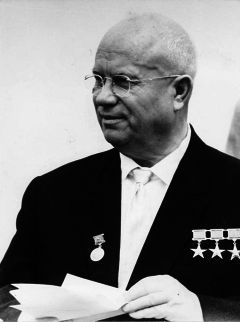
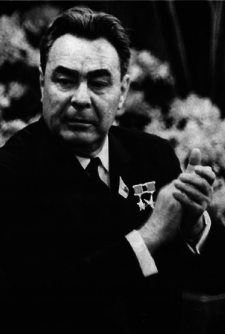
A mushroom cloud rose over the Lop Nur test site in China's remote Xinjiang desert on October 16, 1964, and the People's Republic became the world's fifth nuclear power. The detonation, code-named "596" after the month the Soviet Union withdrew its nuclear assistance, represented one of the most significant shifts in the global balance of power since 1945. China's nuclear program had begun in the mid-1950s with substantial Soviet technical assistance, but the Sino-Soviet split that widened through the late 1950s led Moscow to pull its advisors and blueprints in June 1959. Chinese scientists, led by physicist Qian Sanqiang and guided by the "Two Bombs, One Satellite" program overseen by Marshal Nie Rongzhen, were forced to complete the project on their own. The fact that they succeeded in just five years without foreign assistance stunned Western intelligence agencies, which had predicted the Chinese bomb was still several years away. The timing was doubly significant. On the same day in Moscow, the Soviet Politburo completed a bloodless coup against Nikita Khrushchev, replacing him with Leonid Brezhnev as General Secretary and Alexei Kosygin as Premier. The coincidence meant that the world woke up to both a new Chinese nuclear capability and a new Soviet leadership — a double disruption of the Cold War order. The Chinese test fundamentally changed Asian geopolitics. Japan, India, and other regional powers had to recalculate their security positions. India would conduct its own nuclear test a decade later, partly in response to the Chinese capability. The test also hardened American resolve in Vietnam, where policymakers feared that a nuclear-armed China backing North Vietnam made the domino theory more dangerous. China went on to develop thermonuclear weapons by 1967 and intercontinental ballistic missiles by 1980, ensuring that no major power conflict in Asia could proceed without considering Chinese nuclear capabilities.
October 16, 1964
62 years ago
Key Figures & Places



What Else Happened on October 16
Ricimer, the barbarian general who commanded Rome's army, defeated Emperor Avitus at Piacenza and forced him to abdicate. Avitus became a bishop and died two mo…
Wu Zetian declared herself emperor of China, not empress, deliberately claiming the masculine title and establishing her own Zhou dynasty, interrupting the Tang…
Abd ar-Rahman III became Emir of Córdoba on October 15, 912, at age 21. He inherited a collapsing emirate — rebels controlled most of Al-Andalus. He spent 20 ye…
King Otto I crushed a Slavic rebellion on October 16, 955, near the Raxa River in what's now northeastern Germany. The Slavs had revolted against forced Christi…
The Council of Vienne convened on October 16, 1311, to decide what to do about the Knights Templar. King Philip IV of France wanted them destroyed — he owed the…
Jadwiga was crowned King of Poland in 1384, not Queen. She was 10 years old. The masculine title gave her full sovereignty, not just consort status. Polish nobl…
Talk to History
Have a conversation with historical figures who witnessed this era. Ask questions, explore perspectives, and bring history to life.