

Sanger Opens First Birth Control Clinic in America
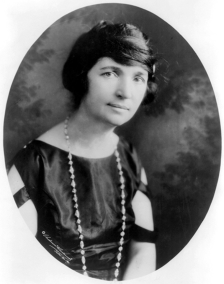
Margaret Sanger opened America's first birth control clinic at 46 Amboy Street in the Brownsville neighborhood of Brooklyn on October 16, 1916, and within nine days police shut it down and arrested her. The clinic's brief existence and Sanger's subsequent trial launched the reproductive rights movement in the United States and began a legal and social transformation that would take decades to complete. Sanger was a trained nurse who had worked among impoverished immigrant families on Manhattan's Lower East Side, where she witnessed women suffering from repeated unwanted pregnancies, botched self-induced abortions, and the poverty that came from having more children than a family could support. The experience radicalized her. She began publishing information about contraception in her newspaper, The Woman Rebel, and fled to Europe in 1914 to avoid prosecution under the Comstock laws, which classified birth control information as obscene material. The Brownsville clinic served nearly 500 women in its nine days of operation. Sanger and her sister Ethel Byrne, also a nurse, provided contraceptive advice and devices to women who lined up around the block. Many were immigrant mothers with multiple children who had no access to family planning information. When police raided the clinic, Sanger was charged with violating New York's obscenity laws. Her trial generated enormous publicity and public sympathy. Sanger's conviction was upheld, but the appeals court ruling contained a crucial exception: doctors could prescribe contraception for medical reasons. This loophole became the legal foundation for the birth control movement. Sanger went on to found the American Birth Control League in 1921, which later became Planned Parenthood. She championed research that led to the development of the oral contraceptive pill, approved by the FDA in 1960. Her legacy is complicated by her association with the eugenics movement and controversial statements about race and immigration, but her role in making contraception legally available and socially acceptable in the United States is beyond dispute.
October 16, 1916
110 years ago
Key Figures & Places

What Else Happened on October 16
Ricimer, the barbarian general who commanded Rome's army, defeated Emperor Avitus at Piacenza and forced him to abdicate. Avitus became a bishop and died two mo…
Wu Zetian declared herself emperor of China, not empress, deliberately claiming the masculine title and establishing her own Zhou dynasty, interrupting the Tang…
Abd ar-Rahman III became Emir of Córdoba on October 15, 912, at age 21. He inherited a collapsing emirate — rebels controlled most of Al-Andalus. He spent 20 ye…
King Otto I crushed a Slavic rebellion on October 16, 955, near the Raxa River in what's now northeastern Germany. The Slavs had revolted against forced Christi…
The Council of Vienne convened on October 16, 1311, to decide what to do about the Knights Templar. King Philip IV of France wanted them destroyed — he owed the…
Jadwiga was crowned King of Poland in 1384, not Queen. She was 10 years old. The masculine title gave her full sovereignty, not just consort status. Polish nobl…
Talk to History
Have a conversation with historical figures who witnessed this era. Ask questions, explore perspectives, and bring history to life.