John Brown Raids Harpers Ferry: Civil War Spark
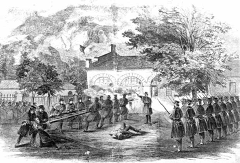
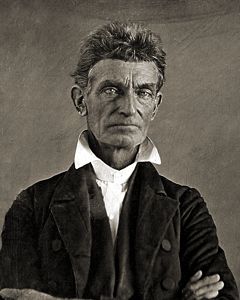
John Brown led twenty-one men — sixteen white and five Black — in an armed raid on the federal arsenal at Harpers Ferry, Virginia, on the night of October 16, 1859, intending to seize weapons and ignite a slave rebellion across the South. The raid failed catastrophically within 36 hours, but Brown's trial and execution turned him into either a martyr or a madman, depending on which side of the Mason-Dixon Line you stood, and pushed the nation measurably closer to civil war. Brown was a 59-year-old abolitionist from Connecticut who had spent years fighting pro-slavery forces in the Kansas Territory, earning the nickname "Old Brown of Osawatomie" after leading guerrilla attacks that killed several pro-slavery settlers. He was deeply religious, believing himself an instrument of God's will to destroy slavery. His plan for Harpers Ferry was ambitious to the point of fantasy: seize the arsenal, arm enslaved people in the surrounding countryside, and establish a free state in the Appalachian Mountains that would serve as a refuge and base for further insurrection. The raid went wrong almost immediately. Brown's men captured the arsenal and took several hostages, including Colonel Lewis Washington, a great-grandnephew of George Washington. But the local militia pinned them down, and no slave uprising materialized. The enslaved people of the region, lacking advance knowledge of the plan and understandably cautious, did not join. A company of U.S. Marines under Colonel Robert E. Lee stormed the engine house where Brown's men had barricaded themselves, killing ten of the raiders and capturing Brown, who was wounded by saber cuts. Brown's trial was swift. He was convicted of murder, conspiracy, and treason against Virginia and hanged on December 2, 1859. His composure and eloquence during the trial electrified the North. Ralph Waldo Emerson compared him to Christ, and Henry David Thoreau called him "a crucified hero." The South was terrified, seeing confirmation that abolitionists would use violence to destroy their way of life. Brown's raid did not start the Civil War, but it hardened positions on both sides and demonstrated that the slavery question would ultimately be settled not by compromise but by blood.
October 16, 1859
167 years ago
Key Figures & Places
What Else Happened on October 16
Ricimer, the barbarian general who commanded Rome's army, defeated Emperor Avitus at Piacenza and forced him to abdicate. Avitus became a bishop and died two mo…
Wu Zetian declared herself emperor of China, not empress, deliberately claiming the masculine title and establishing her own Zhou dynasty, interrupting the Tang…
Abd ar-Rahman III became Emir of Córdoba on October 15, 912, at age 21. He inherited a collapsing emirate — rebels controlled most of Al-Andalus. He spent 20 ye…
King Otto I crushed a Slavic rebellion on October 16, 955, near the Raxa River in what's now northeastern Germany. The Slavs had revolted against forced Christi…
The Council of Vienne convened on October 16, 1311, to decide what to do about the Knights Templar. King Philip IV of France wanted them destroyed — he owed the…
Jadwiga was crowned King of Poland in 1384, not Queen. She was 10 years old. The masculine title gave her full sovereignty, not just consort status. Polish nobl…
Talk to History
Have a conversation with historical figures who witnessed this era. Ask questions, explore perspectives, and bring history to life.