Marie Antoinette Guillotined: Monarchy's Final Act
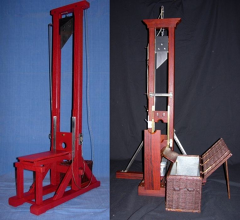
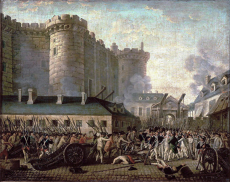
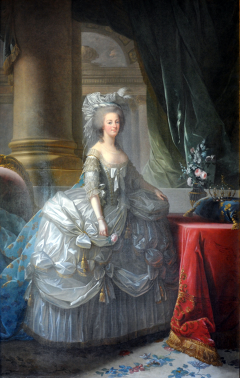
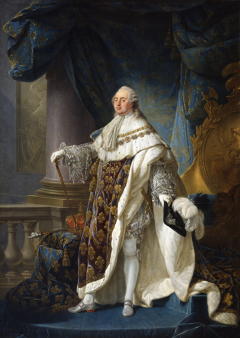
Marie Antoinette rode to the guillotine in an open cart on October 16, 1793, her hair shorn white, her hands bound behind her back, staring straight ahead as Parisian crowds lined the route to jeer. She was 37 years old, and the French Revolution had already killed her husband Louis XVI nine months earlier. Her execution was both the climax of popular fury against the monarchy and one of the most controversial acts of revolutionary justice. Born an Austrian archduchess in 1755, Marie Antoinette arrived in France at age 14 to marry the future Louis XVI, a match designed to cement the alliance between the Habsburg and Bourbon dynasties. She was deeply unpopular from the start. The French public resented the Austrian alliance and viewed the young queen's extravagant spending and love of fashion as evidence of aristocratic contempt for ordinary suffering. The famous quote "Let them eat cake" was almost certainly never spoken by her, but it captured the public perception perfectly. The Revolution that began in 1789 trapped the royal family in an increasingly dangerous spiral. Louis and Marie Antoinette were forced from Versailles to Paris, placed under effective house arrest in the Tuileries Palace, and caught attempting to flee France in the disastrous Flight to Varennes in June 1791. That failed escape destroyed whatever sympathy remained for the monarchy and convinced many revolutionaries that the king was conspiring with foreign powers against his own people. Louis was executed in January 1793, and Marie Antoinette was transferred to the Conciergerie prison. Her trial before the Revolutionary Tribunal was a grotesque affair that included baseless accusations of sexual abuse of her own son — charges so outrageous that they generated momentary sympathy even among her enemies. Found guilty of treason, she was executed the same day. On the scaffold, she accidentally stepped on the executioner's foot and reportedly said, "Pardon me, sir. I did not mean to do it." Her body was thrown into an unmarked grave. Marie Antoinette remains a polarizing figure — tragic victim or symbol of royal excess, depending on who tells the story.
October 16, 1793
233 years ago
Key Figures & Places
What Else Happened on October 16
Ricimer, the barbarian general who commanded Rome's army, defeated Emperor Avitus at Piacenza and forced him to abdicate. Avitus became a bishop and died two mo…
Wu Zetian declared herself emperor of China, not empress, deliberately claiming the masculine title and establishing her own Zhou dynasty, interrupting the Tang…
Abd ar-Rahman III became Emir of Córdoba on October 15, 912, at age 21. He inherited a collapsing emirate — rebels controlled most of Al-Andalus. He spent 20 ye…
King Otto I crushed a Slavic rebellion on October 16, 955, near the Raxa River in what's now northeastern Germany. The Slavs had revolted against forced Christi…
The Council of Vienne convened on October 16, 1311, to decide what to do about the Knights Templar. King Philip IV of France wanted them destroyed — he owed the…
Jadwiga was crowned King of Poland in 1384, not Queen. She was 10 years old. The masculine title gave her full sovereignty, not just consort status. Polish nobl…
Talk to History
Have a conversation with historical figures who witnessed this era. Ask questions, explore perspectives, and bring history to life.