
Gorbachev Wins Nobel: The Cold War's End Begins
The Norwegian Nobel Committee awarded its 1990 Peace Prize to Mikhail Gorbachev on October 15, honoring the Soviet leader for policies that were, at that very moment, dismantling the empire he governed. Glasnost and perestroika — openness and restructuring — had unleashed forces that Gorbachev could guide but never fully control, and within fourteen months of receiving the prize, the Soviet Union would cease to exist. Gorbachev had risen to power in March 1985 as General Secretary of the Communist Party, the youngest Soviet leader since Stalin. He inherited a stagnating economy, a ruinous war in Afghanistan, and an arms race that consumed a quarter of the nation's output. Rather than doubling down on repression, he chose reform. Glasnost lifted censorship and allowed public criticism of the government for the first time in Soviet history. Perestroika attempted to modernize the command economy by introducing limited market mechanisms. The international consequences were revolutionary. Gorbachev withdrew Soviet troops from Afghanistan, signed landmark arms reduction treaties with the United States, and — most remarkably — refused to use military force when Eastern European nations began breaking free of Soviet control in 1989. The Berlin Wall fell on November 9, 1989, and Soviet tanks stayed in their garrisons. Poland, Hungary, Czechoslovakia, Romania, Bulgaria, and East Germany all shed their communist governments within months, and Gorbachev let them go. The Nobel Committee praised his "leading role in the peace process" and his contribution to "dramatically changing" East-West relations. At home, the award was met with ambivalence. Many Soviets blamed Gorbachev for economic chaos, empty store shelves, and the loss of superpower status. Conservative hardliners would attempt a coup against him in August 1991, and while it failed, the aftermath accelerated the Soviet Union's dissolution. Gorbachev resigned on December 25, 1991. History's verdict remains divided: reformer or destroyer, visionary or naïf, the man who ended the Cold War peacefully or the man who lost an empire.
October 15, 1990
36 years ago
Key Figures & Places
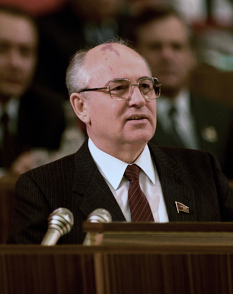
Mikhail Gorbachev
Wikipedia
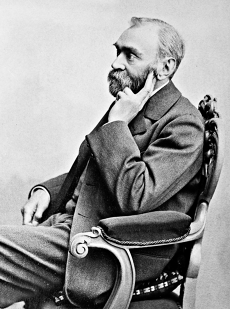
Nobel Peace Prize
Wikipedia
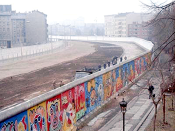
Cold War
Wikipedia
Mikhail Gorbachev
Wikipedia
Nobel Peace Prize
Wikipedia
David Trimble
Wikipedia
First Minister and Deputy First Minister of Northern Ireland
Wikipedia
Northern Ireland
Wikipedia
Prime minister
Wikipedia
Good Friday Agreement
Wikipedia
What Else Happened on October 15
Belisarius entered Carthage on foot, leading his army through the gates the Vandals had abandoned. He'd recaptured North Africa for Byzantium in a single campai…
The Witan proclaimed Edgar the Ætheling king of England after Harold II's death at Hastings, but the 14-year-old boy was never crowned. Edgar lacked the militar…
Edgar the Ætheling was proclaimed King of England after Harold died at Hastings. He was fifteen, the last male member of the royal house. He was never crowned. …
Henry of Flanders led 260 Latin knights against Theodore Lascaris and 2,000 Byzantine cavalry at the Rhyndacus River. The Latins had conquered Constantinople ei…
Suleiman the Magnificent besieged Vienna for three weeks in 1529 with 120,000 troops, expecting the city to surrender. It didn't. His siege guns were stuck in m…
Ottoman forces abandoned the Siege of Vienna after failing to breach the city walls, signaling the end of their rapid expansion into Central Europe. This retrea…
Talk to History
Have a conversation with historical figures who witnessed this era. Ask questions, explore perspectives, and bring history to life.