

Iron Lung Saves Lives: Medical Breakthrough in 1928
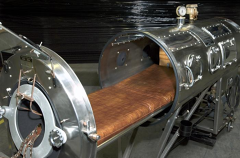
Philip Drinker and Louis Agassiz Shaw's iron lung respirator was used for the first time at Boston Children's Hospital on October 12, 1928, and a little girl dying of respiratory failure from polio began to breathe again. The machine — essentially a sealed metal tank that created negative pressure to force air into paralyzed lungs — would save thousands of lives over the next three decades, becoming the most recognizable medical device of the polio era. Drinker, a Harvard engineer, and Shaw, a physician, built their prototype using two vacuum cleaners and an iron box. The principle was straightforward: the patient lay inside the sealed chamber with only their head exposed, and a motorized bellows alternately decreased and increased air pressure around the body, mechanically expanding and contracting the chest. The rhythmic whooshing of the machine became the soundtrack of polio wards across America. Poliomyelitis attacked the nervous system and could paralyze the muscles responsible for breathing, killing patients through suffocation. Before the iron lung, there was essentially no treatment for this complication. The machine gave victims time for their bodies to recover, and many patients spent only weeks inside. Others, with more severe nerve damage, required the respirator for months or years. Some spent decades in iron lungs, living remarkably full lives despite their confinement. The iron lung era peaked in the 1940s and early 1950s, when major polio epidemics swept the United States. Hospitals set up rows of the machines, and the image of children sealed inside metal cylinders became a powerful fundraising tool for the March of Dimes. Jonas Salk's vaccine, introduced in 1955, and Albert Sabin's oral vaccine shortly after, eventually made iron lungs obsolete by eliminating the disease itself. Modern positive-pressure ventilators replaced the iron lung's negative-pressure approach, but the device remains a powerful symbol of both medical ingenuity and the terror that polio once inspired.
October 12, 1928
98 years ago
Key Figures & Places




What Else Happened on October 12
Cyrus the Great's forces marched into Babylon on October 12, 539 BC, toppling a millennia-old empire without a battle. This conquest immediately freed Jewish ca…
Cyrus the Great marched his Persian forces into Babylon, ending the Neo-Babylonian Empire without a major battle. By allowing the city’s captive populations, in…
Edwin of Northumbria died at Hatfield Chase with most of his army. He'd united northern England and converted to Christianity. Penda of Mercia and Cadwallon of …
King Ladislaus I established the fortress of Varadinum, formally documenting the site now known as Oradea in a papal bull. This administrative recognition trans…
King John lost the English Crown Jewels in The Wash in 1216 when his baggage train tried to cross the estuary at low tide and misjudged the timing. The tide cam…
Nichiren Shōshū split from other Buddhist schools on October 12, 1279, when Nikko left Mount Minobu after a dispute over doctrine. He founded Taiseki-ji temple …
Talk to History
Have a conversation with historical figures who witnessed this era. Ask questions, explore perspectives, and bring history to life.