Bush Creates Homeland Security: Post-9/11 America
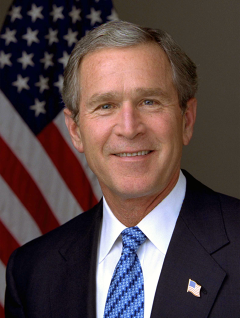
Twenty-six days after the September 11 attacks, President George W. Bush announced the creation of the Office of Homeland Security on October 8, 2001, appointing Pennsylvania Governor Tom Ridge as its first director. The office — and the Department of Homeland Security it became a year later — represented the largest reorganization of the federal government since the creation of the Department of Defense in 1947 and fundamentally reshaped the relationship between the American state and its citizens. The immediate problem was bureaucratic: the intelligence failures that preceded September 11 were partly a product of fragmentation. The CIA tracked threats abroad, the FBI tracked threats domestically, the INS managed immigration, the Coast Guard patrolled waterways, and Customs inspected cargo — all under different cabinet departments with different cultures, databases, and chains of command. The 9/11 hijackers had exploited the gaps between these agencies, entering the country legally, moving freely, and communicating without triggering coordinated surveillance. Ridge's initial office had coordination authority but no operational control over any existing agency. Bush elevated it to a full cabinet department in November 2002, signed into law by the Homeland Security Act. The new Department of Homeland Security absorbed 22 existing federal agencies and approximately 170,000 employees, including the Secret Service, Coast Guard, Customs, Immigration, FEMA, and the Transportation Security Administration (TSA), which had itself been created just two months after September 11. The reorganization encountered immediate problems. Merging agencies with incompatible computer systems, conflicting institutional cultures, and different labor agreements produced years of management chaos. FEMA, previously an independent agency with direct presidential access, was buried inside the new department — a structural change that contributed to the disastrous federal response to Hurricane Katrina in 2005. The department's creation also accelerated a surveillance expansion that generated fierce civil liberties debates. The USA PATRIOT Act, signed a week before Ridge's appointment, had already expanded government monitoring powers. DHS programs including the color-coded threat advisory system, airport body scanners, and immigration enforcement databases became fixtures of post-9/11 American life. The office Bush announced on October 8 grew into a department with a $60 billion annual budget, making it the third-largest cabinet department — a measure of how profoundly September 11 reorganized American governance.
October 8, 2001
25 years ago
Key Figures & Places
What Else Happened on October 8
Constantine defeated his co-emperor Licinius at Cibalae in 314, killing 20,000 of his soldiers and seizing his European territories in a single afternoon. They'…
Constantine I crushed the forces of Licinius at the Battle of Cibalae, forcing his rival to cede the Balkan provinces. This victory split the Roman Empire into …
The Council of Chalcedon opened in 451 with 520 bishops debating whether Christ had one nature or two. Emperor Marcian called the council to resolve the questio…
The Council of Chalcedon opened in 451 with 520 bishops packed into the church of Saint Euphemia, arguing over whether Christ had one nature or two. Emperor Mar…
Louis the Younger crushed the forces of his uncle, Charles the Bald, at the Battle of Andernach, halting West Frankish expansion into the Rhineland. This decisi…
Dmitar Zvonimir was crowned King of Croatia in 1075 with a crown sent by Pope Gregory VII, making Croatia a formal ally of Rome against Byzantium. The ceremony …
Talk to History
Have a conversation with historical figures who witnessed this era. Ask questions, explore perspectives, and bring history to life.