

KLM Founded: World's Oldest Airline Takes Off
Eight Dutch businessmen and a former military pilot pooled their resources on October 7, 1919, to found an airline that would still be operating under its original name more than a century later. Koninklijke Luchtvaart Maatschappij — Royal Dutch Airlines, universally known as KLM — became the world's oldest airline still operating under its founding name, outlasting thousands of competitors that rose and vanished across the aviation industry's turbulent first century. The airline was the brainchild of Albert Plesman, a 29-year-old former military aviator and the driving force behind a successful Amsterdam aviation exhibition earlier that year. Queen Wilhelmina granted the "Royal" designation, lending prestige to an enterprise that had no aircraft, no routes, and no passengers. KLM's first flight, on May 17, 1920, carried two British journalists and a bundle of newspapers from London to Amsterdam in a leased De Havilland DH-16. Plesman's ambition outpaced his resources. KLM's early years were marked by the same financial fragility that killed most interwar airlines. Government subsidies kept the company solvent while Plesman expanded routes across Europe and, ambitiously, to the Dutch East Indies. The Amsterdam-to-Batavia (Jakarta) route, inaugurated in 1929, covered over 9,000 miles and required multiple stops, taking roughly twelve days. The route demonstrated that long-haul commercial aviation was feasible, if uncomfortable. The airline survived World War II — barely. German occupation grounded all flights in the Netherlands, and KLM operated a skeleton service from the Dutch West Indies using a single Douglas DC-3. After liberation, Plesman rebuilt aggressively. KLM was the first European airline to introduce the Douglas DC-8 jet on transatlantic routes in 1960 and became an early adopter of the Boeing 747 in 1971. Financial pressures eventually forced consolidation. KLM merged with Air France in 2004 to form the Air France-KLM Group, one of the world's largest airline holding companies. The Dutch carrier retained its name, branding, and operational identity within the group. From a borrowed biplane to a fleet of widebody jets, KLM's survival through two world wars, depressions, oil crises, and industry deregulation makes it a case study in institutional resilience.
October 7, 1919
107 years ago
Key Figures & Places

The Netherlands
Wikipedia

KLM
Wikipedia
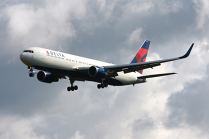
airline
Wikipedia

Flag carrier
Wikipedia

KLM
Wikipedia

Netherlands
Wikipedia

William II of the Netherlands
Wikipedia
Anexo:Monarcas de los Países Bajos
Wikipedia

Leuven
Wikipedia

Quema de libros
Wikipedia

Monarchy of the Netherlands
Wikipedia

Geschichte der Niederlande
Wikipedia

William I of the Netherlands
Wikipedia

Aviation
Wikipedia
What Else Happened on October 7
The Hebrew calendar counts time from this date, which rabbinic tradition identifies as the moment of the world's creation. By anchoring religious life to this s…
The Hebrew calendar counts from a date calculated centuries later by medieval rabbis: October 7, 3761 BCE. They worked backward through biblical genealogies, ad…
Pope Mark died after a brief eight-month tenure, leaving the Roman Church without a leader during a period of intense theological friction over Arianism. His de…
A French admiral commanded the Genoese fleet at Modon in 1403 because Genoa had hired him—the republic was too broke to field its own commander. Venice won deci…
Uppsala University opened its doors to students, establishing the first institution of higher learning in Scandinavia. By securing papal authorization, the univ…
Spanish forces defeated Venice at the Battle of La Motta in 1513, killing 3,000 Venetian soldiers. The War of the League of Cambrai had Pope Julius II, France, …
Talk to History
Have a conversation with historical figures who witnessed this era. Ask questions, explore perspectives, and bring history to life.