

Gang of Four Arrested: Cultural Revolution Ends
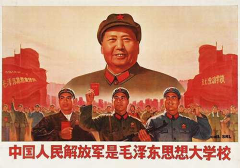
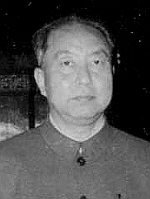
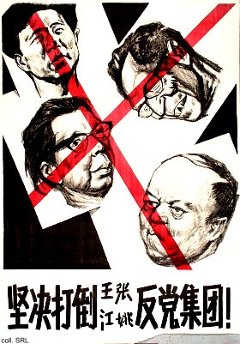
Less than a month after Mao Zedong's death, the radical faction that had driven China's Cultural Revolution was finished. On October 6, 1976, Premier Hua Guofeng ordered the arrest of the Gang of Four — Jiang Qing (Mao's widow), Zhang Chunqiao, Yao Wenyuan, and Wang Hongwen — ending a decade of ideological terror that had killed an estimated 500,000 to two million people and shattered Chinese society from its universities to its villages. The coup was executed with the efficiency of a military operation because, in essence, it was one. Hua Guofeng, whom Mao had designated as successor shortly before his death on September 9, conspired with veteran military leaders Marshal Ye Jianying and Wang Dongxing, commander of Mao's personal security unit. The four targets were lured to separate locations in Beijing's Zhongnanhai government compound under the pretense of an emergency Politburo meeting and arrested simultaneously. Jiang Qing, reportedly, went screaming. The Gang of Four had wielded enormous power during the Cultural Revolution, controlling propaganda, the arts, and significant portions of the party apparatus. Jiang Qing had orchestrated the persecution of intellectuals, artists, and party moderates. Zhang Chunqiao oversaw purges in Shanghai. Together, they had pushed Mao's revolutionary radicalism to extremes that even other party hardliners found destabilizing. When Mao's failing health weakened his protection, their enemies within the party moved. The arrests were announced publicly on October 24 and triggered celebrations across China. In Beijing and Shanghai, millions of people took to the streets in spontaneous demonstrations of relief. Citizens who had spent ten years denouncing each other in struggle sessions, watching colleagues sent to labor camps, and hiding forbidden books now openly wept with joy. The political consequences were transformative. With the radical faction eliminated, Deng Xiaoping — twice purged during the Cultural Revolution — returned to power by 1978 and launched the economic reforms that turned China into the world's second-largest economy. The Gang of Four stood trial in 1980-81. Jiang Qing was sentenced to death, later commuted to life imprisonment. She committed suicide in 1991.
October 6, 1976
50 years ago
Key Figures & Places

What Else Happened on October 6
Two Roman armies suffered a catastrophic annihilation at the hands of the Cimbri and Teutones near the Rhône River, losing an estimated 80,000 soldiers. This di…
The Cimbri annihilated two Roman armies at Arausio, killing 80,000 soldiers and 40,000 camp followers. It was Rome's worst defeat since Cannae. The disaster hap…
Tigranes the Great watched his army collapse from a hilltop. He'd brought 250,000 men to fight Lucullus and his 18,000 Romans outside Tigranocerta. The Romans c…
Roman legions under Lucullus shattered the Armenian army at the Battle of Tigranocerta, dismantling the regional hegemony of King Tigranes the Great. This victo…
October 6 was an unlucky day in Roman superstition—the anniversary of the Battle of Arausio. Lucullus attacked Tigranes anyway and routed an Armenian army five …
Wang Mang's head was kept in the imperial treasury for 273 years. Rebels captured him when Chang'an fell, killed him, cut off his head, and preserved it as a tr…
Talk to History
Have a conversation with historical figures who witnessed this era. Ask questions, explore perspectives, and bring history to life.