Egypt Strikes Israel: Yom Kippur War Begins
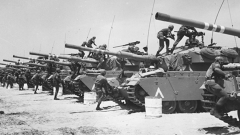
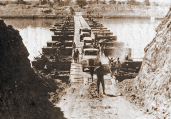
At 2:00 p.m. on October 6, 1973 — Yom Kippur, the holiest day in the Jewish calendar — Egyptian and Syrian forces launched a coordinated surprise attack against Israel that shattered the myth of Israeli military invincibility and redrew the political map of the Middle East. Two hundred Egyptian aircraft crossed the Suez Canal simultaneously as 2,000 artillery pieces opened fire on the Bar-Lev Line, the fortified Israeli defense network along the canal's eastern bank. The timing was calculated with precision. Egyptian President Anwar Sadat and Syrian President Hafez al-Assad chose Yom Kippur because Israeli reserves would be off duty, roads would be empty, and radio stations would be silent. Egyptian engineers had spent months rehearsing a canal crossing, developing high-pressure water cannons to blast gaps through the Israeli sand ramparts. Within hours, 32,000 Egyptian soldiers crossed the canal, overwhelmed the skeleton garrisons of the Bar-Lev Line, and established bridgeheads on the Sinai side. On the Golan Heights, 1,400 Syrian tanks — backed by mechanized infantry divisions — attacked Israeli positions defended by fewer than 180 tanks. The outnumbered Israelis fought a desperate holding action that nearly broke. At one point, Syrian forces came within range of the Sea of Galilee, and Israeli commanders discussed the use of nuclear weapons. Israel recovered through emergency mobilization, American resupply, and tactical brilliance. General Ariel Sharon identified a gap between Egyptian armies on the Sinai front and crossed the Suez Canal in the opposite direction, encircling Egypt's Third Army. On the Golan front, Israeli reserves arrived and drove the Syrians back beyond the 1967 ceasefire line. A ceasefire brokered by the United States and Soviet Union took effect on October 25. The war killed approximately 2,700 Israelis and an estimated 8,500 to 18,500 Egyptians and Syrians. Arab oil-producing states imposed an embargo on nations supporting Israel, quadrupling oil prices and triggering a global economic crisis. The conflict's political aftermath led directly to the Camp David Accords five years later, which established peace between Egypt and Israel — the first such agreement between Israel and any Arab state.
October 6, 1973
53 years ago
Key Figures & Places
What Else Happened on October 6
Two Roman armies suffered a catastrophic annihilation at the hands of the Cimbri and Teutones near the Rhône River, losing an estimated 80,000 soldiers. This di…
The Cimbri annihilated two Roman armies at Arausio, killing 80,000 soldiers and 40,000 camp followers. It was Rome's worst defeat since Cannae. The disaster hap…
Tigranes the Great watched his army collapse from a hilltop. He'd brought 250,000 men to fight Lucullus and his 18,000 Romans outside Tigranocerta. The Romans c…
Roman legions under Lucullus shattered the Armenian army at the Battle of Tigranocerta, dismantling the regional hegemony of King Tigranes the Great. This victo…
October 6 was an unlucky day in Roman superstition—the anniversary of the Battle of Arausio. Lucullus attacked Tigranes anyway and routed an Armenian army five …
Wang Mang's head was kept in the imperial treasury for 273 years. Rebels captured him when Chang'an fell, killed him, cut off his head, and preserved it as a tr…
Talk to History
Have a conversation with historical figures who witnessed this era. Ask questions, explore perspectives, and bring history to life.