

Vanunu Exposes Israel's Nuclear Arsenal to the World
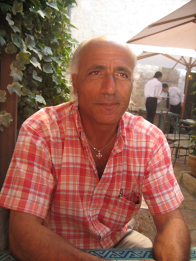
Mordechai Vanunu, a former technician at Israel's Dimona nuclear facility, walked into the offices of the Sunday Times in London carrying two rolls of film that would expose one of the world's worst-kept secrets. On October 5, 1986, the newspaper published his story under the headline "Revealed — the secrets of Israel's nuclear arsenal," confirming with photographic evidence that Israel possessed a sophisticated nuclear weapons program capable of producing warheads far more advanced than analysts had assumed. Vanunu had worked as a technician at the Negev Nuclear Research Center near Dimona from 1976 to 1985. During his final year, he smuggled a camera into the facility's underground plutonium separation plant — known as Machon 2 — and photographed equipment, control rooms, and models of nuclear weapon components. The images, evaluated by nuclear physicists consulted by the Sunday Times, indicated that Israel had produced enough weapons-grade plutonium for an estimated 100 to 200 nuclear warheads, including thermonuclear (hydrogen) bombs and neutron bombs. The revelation was explosive because Israel had maintained a policy of nuclear ambiguity for decades — neither confirming nor denying the existence of its arsenal. This deliberate opacity, crafted to deter adversaries without provoking an arms race or triggering nonproliferation sanctions from the United States, had been a cornerstone of Israeli strategic doctrine since the 1960s. Before the story was published, Israeli intelligence mounted an operation to silence Vanunu. A Mossad agent, identified by the alias "Cindy," lured him from London to Rome, where he was drugged, bound, and smuggled onto a cargo ship to Israel. He was tried in secret, convicted of treason and espionage, and sentenced to eighteen years in prison — eleven of them in solitary confinement. Vanunu's disclosures did not fundamentally alter the Middle Eastern power balance, since most governments already assumed Israel had nuclear weapons. But the photographs transformed assumption into documented fact, complicating nonproliferation diplomacy and fueling demands from Arab states for a nuclear-free Middle East. Vanunu was released in 2004 but remains under severe restrictions on travel and speech.
October 5, 1986
40 years ago
Key Figures & Places


What Else Happened on October 5
An Egyptian border guard opened fire on Israeli tourists at Ras Burqa in the Sinai in 1985, killing seven, including four children. He emptied three rifle magaz…
Three kings led the invasion of Iberia in 456: Theodoric II of the Visigoths, Chilperic I of the Burgundians, and Gondioc of the Franks. They were following ord…
Heraclius sailed from Carthage to Constantinople in 610 to overthrow Emperor Phocas, who'd murdered his way to the throne eight years earlier. Heraclius's ships…
Heraclius was crowned Byzantine Emperor in 610 after sailing from Carthage to Constantinople and overthrowing Phocas, who'd murdered the previous emperor. Phoca…
Pope Stephen IV traveled to Reims to crown Louis the Pious in 816, even though Louis had already crowned himself three years earlier. The Pope needed Frankish m…
The Fourth Council of Constantinople convened to settle the Photian Schism. Patriarch Photius had replaced Ignatius after Emperor Michael III forced Ignatius ou…
Talk to History
Have a conversation with historical figures who witnessed this era. Ask questions, explore perspectives, and bring history to life.