

Monty Python Debuts on BBC: Comedy Revolution Begins
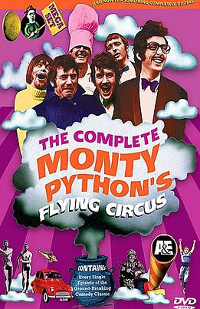
A BBC continuity announcer introduced the program. A man in a suit sat behind a desk. Then a pig exploded, a knight hit a woman with a rubber chicken, and a man in a pepperpot hat screamed about the Spanish Inquisition. On October 5, 1969, "Monty Python's Flying Circus" debuted on BBC One at 10:55 p.m. — late enough that most sensible people were asleep, which suited the show's creators perfectly. The six members of the troupe — Graham Chapman, John Cleese, Terry Gilliam, Eric Idle, Terry Jones, and Michael Palin — had all cut their teeth on earlier BBC comedy programs, including "At Last the 1948 Show" and "Do Not Adjust Your Set." Their shared frustration was the conventional sketch format: setup, escalation, punchline, applause. Python's innovation was to abolish the punchline entirely. Sketches flowed into each other through Gilliam's surreal animated sequences, or simply stopped when the performers got bored. A man in a colonel's uniform would walk on and declare the sketch "too silly," and the show would lurch somewhere else entirely. The BBC was uncertain what to make of it. The program was buried in a late-night slot and given almost no promotion. Early reviews were mixed — some critics praised its inventiveness while others found it incomprehensible. Ratings were modest but grew steadily as university students and countercultural audiences discovered the show through word of mouth. By the second series, "Python" had become a phenomenon, its catchphrases — "And now for something completely different," "Nobody expects the Spanish Inquisition," "It's just a flesh wound" — entering everyday English. The show ran for four series and forty-five episodes between 1969 and 1974, though Cleese departed after the third series. The troupe then pivoted to films: "Monty Python and the Holy Grail" (1975), "Life of Brian" (1979), and "The Meaning of Life" (1983), each expanding the audience internationally. Python's influence on comedy was structural, not just stylistic. "Saturday Night Live," "The Simpsons," "South Park," and virtually every absurdist comedy program of the past fifty years traces a direct line back to that late-night BBC debut.
October 5, 1969
57 years ago
Key Figures & Places

What Else Happened on October 5
An Egyptian border guard opened fire on Israeli tourists at Ras Burqa in the Sinai in 1985, killing seven, including four children. He emptied three rifle magaz…
Three kings led the invasion of Iberia in 456: Theodoric II of the Visigoths, Chilperic I of the Burgundians, and Gondioc of the Franks. They were following ord…
Heraclius sailed from Carthage to Constantinople in 610 to overthrow Emperor Phocas, who'd murdered his way to the throne eight years earlier. Heraclius's ships…
Heraclius was crowned Byzantine Emperor in 610 after sailing from Carthage to Constantinople and overthrowing Phocas, who'd murdered the previous emperor. Phoca…
Pope Stephen IV traveled to Reims to crown Louis the Pious in 816, even though Louis had already crowned himself three years earlier. The Pope needed Frankish m…
The Fourth Council of Constantinople convened to settle the Photian Schism. Patriarch Photius had replaced Ignatius after Emperor Michael III forced Ignatius ou…
Talk to History
Have a conversation with historical figures who witnessed this era. Ask questions, explore perspectives, and bring history to life.