Wright Flyer III: 24-Mile Flight Sets World Record
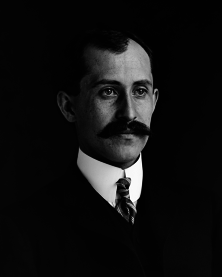
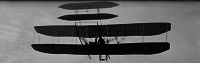
Wilbur Wright circled a pasture outside Dayton, Ohio, for thirty-nine minutes and twenty-three seconds, covering just over twenty-four miles without landing. The October 5, 1905, flight of the Wright Flyer III was the moment powered aviation stopped being an experiment and became a practical reality. Two years after their first twelve-second hop at Kitty Hawk, the Wrights had built a machine that could take off, maneuver, and stay aloft until its fuel ran out. The Flyer III was a fundamentally different aircraft from the fragile machine that had bounced along the sand at Kill Devil Hills in December 1903. That first Flyer was barely controllable, prone to stalling, and incapable of turning without risking a crash. The 1904 Flyer II, tested at Huffman Prairie near Dayton, was only marginally better — Orville suffered a serious crash in August 1904 that nearly ended the program. The brothers methodically diagnosed the problem: the aircraft's center of gravity was too close to its center of pressure, making it dangerously unstable in pitch. Their redesign for the Flyer III moved the elevator and rudder farther from the wings, separated the pitch and roll controls into independent mechanisms, and added a larger fuel tank. The result was an aircraft that could fly figure-eights, bank smoothly, and recover from stalls. Test flights in September 1905 grew progressively longer — five minutes, then eleven, then twenty. The October 5 flight was the definitive proof. Wilbur took off from the Huffman Prairie launch rail at 10:05 a.m. and circled the field roughly thirty times at an altitude of about sixty feet, watched by a handful of neighbors and a local beekeeper named Amos Stauffer. When he finally landed, the fuel tank was nearly dry. The 24.5-mile distance shattered every previous aviation record and wouldn't be exceeded for three years. The Wrights then did something baffling: they disassembled the Flyer III and stopped flying entirely for over two years while they negotiated patent protections and military contracts. They understood that their achievement was both a scientific breakthrough and a commercial asset, and they refused to demonstrate it publicly until they had secured their investment.
October 5, 1905
121 years ago
Key Figures & Places
What Else Happened on October 5
An Egyptian border guard opened fire on Israeli tourists at Ras Burqa in the Sinai in 1985, killing seven, including four children. He emptied three rifle magaz…
Three kings led the invasion of Iberia in 456: Theodoric II of the Visigoths, Chilperic I of the Burgundians, and Gondioc of the Franks. They were following ord…
Heraclius sailed from Carthage to Constantinople in 610 to overthrow Emperor Phocas, who'd murdered his way to the throne eight years earlier. Heraclius's ships…
Heraclius was crowned Byzantine Emperor in 610 after sailing from Carthage to Constantinople and overthrowing Phocas, who'd murdered the previous emperor. Phoca…
Pope Stephen IV traveled to Reims to crown Louis the Pious in 816, even though Louis had already crowned himself three years earlier. The Pope needed Frankish m…
The Fourth Council of Constantinople convened to settle the Photian Schism. Patriarch Photius had replaced Ignatius after Emperor Michael III forced Ignatius ou…
Talk to History
Have a conversation with historical figures who witnessed this era. Ask questions, explore perspectives, and bring history to life.