Germany Reunifies: Cold War Division Ends
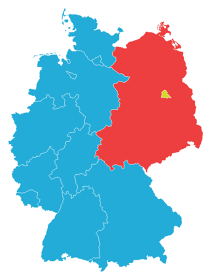
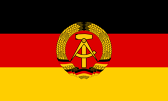
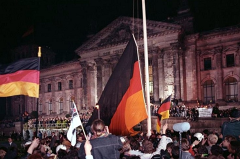
At midnight on October 3, 1990, a liberty bell replica rang outside the Reichstag building in Berlin, and a nation divided for forty-one years became one again. German reunification — the absorption of the German Democratic Republic into the Federal Republic — ended the most visible symbol of the Cold War and redrew the political map of Europe overnight. The speed of reunification stunned everyone, including the Germans themselves. Eleven months earlier, the Berlin Wall had still been standing. The chain of events began in May 1989, when Hungary dismantled its border fence with Austria, punching the first hole in the Iron Curtain. Thousands of East Germans poured through the gap. By September, massive Monday demonstrations in Leipzig and other cities — growing from hundreds to hundreds of thousands — made clear that the regime had lost control. The Wall fell on November 9, 1989, in a chaotic evening of confused press conferences and jubilant crowds with hammers. Chancellor Helmut Kohl moved with extraordinary political speed. His Ten-Point Plan, announced just weeks after the Wall fell, outlined a path to reunification that most diplomats considered premature. Margaret Thatcher opposed it. François Mitterrand was uneasy. Mikhail Gorbachev had to be persuaded — a process that involved substantial financial aid to the collapsing Soviet economy. The "Two Plus Four" negotiations between the two Germanys and the four World War II occupying powers (the US, UK, France, and the Soviet Union) produced a treaty granting full sovereignty to a united Germany. East Germany's first and only free election in March 1990 delivered a mandate for rapid unification. Economic merger came first on July 1, when the Deutsche Mark replaced the East German Ostmark at a politically generous one-to-one exchange rate. Political merger followed three months later. The costs were staggering — over two trillion euros in transfers from west to east over the following decades. Factories closed, unemployment soared in the east, and a cultural divide between "Ossis" and "Wessis" persisted for a generation. But October 3 remains Germany's national holiday, marking the moment Cold War division gave way to a single democratic state at the heart of Europe.
October 3, 1990
36 years ago
Key Figures & Places
What Else Happened on October 3
According to legend, Hwanung descended from heaven to Mount Baekdu with 3,000 followers and founded the first Korean kingdom in 2457 BC. His son Dangun, born to…
Vercingetorix rode out of Alesia's gates, alone, and surrendered to Julius Caesar. He'd unified Gaul's tribes against Rome—the only time they'd fought together.…
Mark Antony and Octavian faced Brutus and Cassius at the first Battle of Philippi on October 3, 42 BC, fighting to a tactical draw on the marshy plains of Maced…
Brutus and Cassius faced Octavian and Mark Antony at Philippi. Brutus' forces routed Octavian's legion and overran his camp. Octavian wasn't there—he was sick, …
Theodosius I made the Goths a deal: settle anywhere in the Balkans, keep your weapons, follow your own laws. In exchange, fight for Rome. It was 382. The empire…
Dafydd ap Gruffydd was the last native Prince of Wales. Edward I captured him after his brother Llywelyn died. The English invented a new execution for him: han…
Talk to History
Have a conversation with historical figures who witnessed this era. Ask questions, explore perspectives, and bring history to life.