
Saladin Seizes Jerusalem: Crusader Rule Ends
Eighty-eight years of Crusader rule ended not with a massacre but with a negotiation. On October 2, 1187, Saladin's army entered Jerusalem after a twelve-day siege, and the sultan — in deliberate contrast to the bloodbath the First Crusaders had inflicted in 1099 — allowed the city's Christian inhabitants to ransom their freedom and leave with their possessions. The fall of Jerusalem was the culmination of a military campaign that had begun four months earlier at the Horns of Hattin, where Saladin annihilated the main Crusader field army on July 4, 1187. King Guy of Lusignan was captured. The True Cross — Christendom's most sacred relic, carried into battle as a talisman — was seized. With the Kingdom of Jerusalem's fighting force destroyed in a single afternoon, dozens of Crusader castles and cities surrendered in rapid succession. Acre, Jaffa, Sidon, and Beirut all fell before autumn. Jerusalem's garrison, commanded by Balian of Ibelin, had almost no professional soldiers. Balian knighted every boy over sixteen and armed civilians, but the defense was hopeless against Saladin's siege engines. After breaching the northern wall near the Gate of the Column, Saladin agreed to terms: each person could purchase their freedom for a fixed ransom — ten dinars for a man, five for a woman, one for a child. Those who could not pay would be enslaved. Balian negotiated a lump sum to free seven thousand of the poorest residents, though thousands more were still taken into captivity. Saladin's restraint was both strategic and principled. He wanted Jerusalem intact, not razed, and understood that magnanimity would weaken Christian resolve less than atrocity would inflame it. Churches were largely left standing, though the cross atop the Dome of the Rock was torn down. The Al-Aqsa Mosque, which the Crusaders had converted into a palace, was restored to Muslim worship. The loss of Jerusalem shocked Europe into launching the Third Crusade, bringing Richard the Lionheart to the Levant. But the city would remain in Muslim hands for most of the next seven centuries.
October 2, 1187
839 years ago
Key Figures & Places
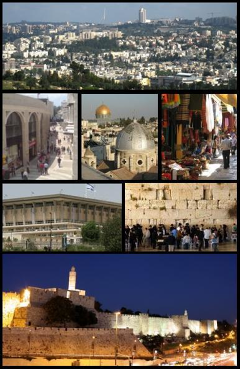
Jerusalem
Wikipedia
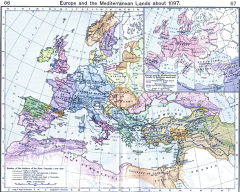
Crusade
Wikipedia
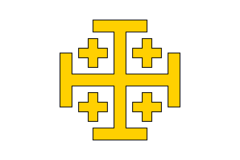
Kingdom of Jerusalem
Wikipedia
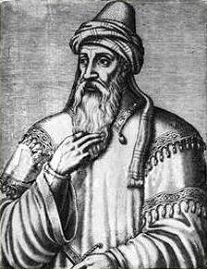
Saladin
Wikipedia
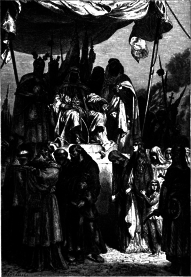
Siege of Jerusalem (1187)
Wikipedia
Saladin
Wikipedia
Siege of Jerusalem (1187)
Wikipedia
Jerusalem
Wikipedia
Portail:Croisades/Éphéméride du jour/2 octobre
Wikipedia
Kingdom of Jerusalem
Wikipedia
Third Crusade
Wikipedia
Crusades
Wikipedia
What Else Happened on October 2
Angry crowds rioted at the Goose Fair in Nottingham in 1766, overturning cheese stalls and attacking merchants who had raised prices beyond what working familie…
Saladin's army had surrounded Jerusalem for 12 days when Balian of Ibelin offered surrender terms: let Christians leave safely or we'll destroy the Dome of the …
Theophilos became Byzantine Emperor at age 25 after his father Michael II died. He continued his father's iconoclasm—destroying religious images, persecuting ic…
Otto I shatters the rebel coalition led by Eberhard of Franconia at the Battle of Andernach, crushing their bid to overthrow his authority. This decisive victor…
King Haakon IV of Norway sent a fleet to Scotland to reclaim the Hebrides. His longships met Scottish forces at Largs in a storm. The battle was chaotic, indeci…
Richard Neville, the Earl of Warwick and the most powerful nobleman in England, organized a rebellion that forced King Edward IV to flee to the Netherlands and …
Talk to History
Have a conversation with historical figures who witnessed this era. Ask questions, explore perspectives, and bring history to life.